Key Facts
- ✓ Interim Venezuelan president Delcy Rodriguez is determined to remain head of state after the capture of Nicolas Maduro by US forces.
- ✓ Rodriguez maintains that no foreign agency rules the country.
- ✓ President Donald Trump announced Caracas will be turning over millions of barrels of oil to the United States.
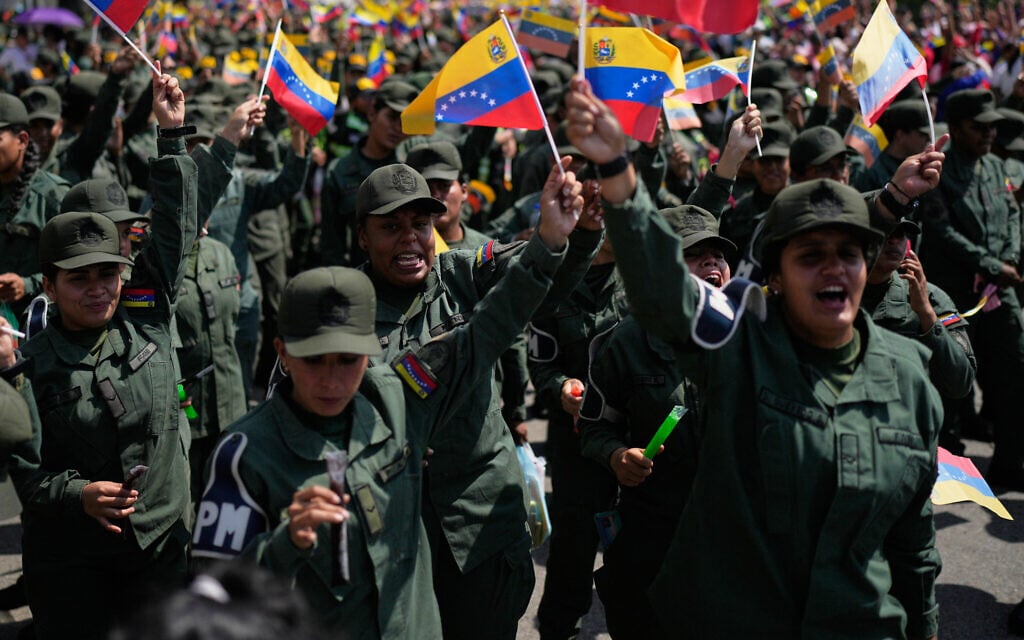
- ✓ Maduro's supporters demonstrated in the streets of Caracas on behalf of the deposed president.
Quick Summary
Interim Venezuelan president Delcy Rodriguez has stated her intention to remain head of state following the capture of Nicolas Maduro by US forces. Rodriguez asserts that no foreign agency rules the country, emphasizing national sovereignty during this transition period.
Meanwhile, President Donald Trump announced that Caracas will be transferring millions of barrels of oil to the United States. As these events unfold, Maduro's supporters have demonstrated in the streets of Caracas in support of the deposed leader.
Rodriguez Asserts Leadership Amidst Transition
Delcy Rodriguez has stepped forward as the interim Venezuelan president following the capture of Nicolas Maduro by US forces. She is determined to remain the head of state during this critical period for the nation. Rodriguez has made it clear that she believes no foreign agency has the right to rule the country, signaling a commitment to maintaining Venezuelan autonomy despite the recent military intervention.
The interim president's stance comes at a time of significant political upheaval. Her assertion of leadership is intended to provide continuity for the government while addressing the circumstances surrounding Maduro's removal. Rodriguez's position highlights the ongoing struggle for control within the Venezuelan political landscape.
US Announces Oil Transfer Agreement
In a parallel development, President Donald Trump has announced that Caracas will be turning over millions of barrels of oil to the United States. This statement suggests a significant shift in the economic relationship between the two nations following the capture of Nicolas Maduro. The announcement indicates that resource management is a key component of the evolving geopolitical situation.
The transfer of oil resources represents a major economic development for Venezuela. While details regarding the terms of this arrangement have not been fully elaborated, the announcement underscores the tangible consequences of the recent political and military actions taken by US forces in the region.
Protests Erupt in Caracas
As the political situation evolves, Maduro's supporters have taken to the streets of Caracas. The demonstrations are being held in support of the deposed president, reflecting the divided sentiments within the Venezuelan population. These protests illustrate the ongoing loyalty many citizens hold for the former leadership despite the change in government control.
The presence of supporters on the streets of the capital city adds a layer of domestic tension to the international dynamics at play. The protests serve as a visual representation of the challenges that the interim government led by Delcy Rodriguez faces in consolidating power and stabilizing the nation.
International and Domestic Implications
The capture of Nicolas Maduro by US forces has triggered a complex set of reactions both domestically and internationally. Delcy Rodriguez's declaration to remain in power is a direct response to the power vacuum created by Maduro's removal. Her insistence on national sovereignty is a key message to both the international community and the Venezuelan people.
The announcement by President Donald Trump regarding the oil transfer further complicates the scenario. It raises questions about the future of Venezuela's resources and the extent of foreign influence in the country's affairs. The combination of domestic protests and international economic announcements creates a volatile environment for the newly established interim government.