M
MercyNews
Home
Back
L'AFP Protección de Colombie lance un fonds Bitcoin destiné aux investisseurs qualifiés
Economics

L'AFP Protección de Colombie lance un fonds Bitcoin destiné aux investisseurs qualifiés

CoinTelegraph1h ago
3 min de lecture
📋

Points Clés

  • L'AFP Protección, deuxième plus grand fonds de pension de Colombie, a annoncé le lancement d'un nouveau fonds d'investissement lié au Bitcoin.
  • L'accès à ce fonds lié au Bitcoin sera strictement limité aux investisseurs qualifiés, garantissant qu'il n'est disponible que pour ceux qui remplissent des critères réglementaires spécifiques.
  • Le fonds est conçu pour compléter, plutôt que remplacer, l'allocation principale des épargnes-pension colombiennes, maintenant la stabilité pour la majorité des épargnants.
  • Cette initiative représente une évolution significative dans la manière dont les institutions financières traditionnelles en Colombie abordent les actifs numériques et les technologies financières émergentes.
  • Le lancement positionne l'AFP Protección à l'avant-garde de l'innovation financière au sein du système de pension du pays, offrant un chemin réglementé vers l'exposition au Bitcoin.

Une Nouvelle Frontière Financière

Dans une initiative historique pour la finance latino-américaine, l'AFP Protección, deuxième plus grand fonds de pension de Colombie, a annoncé le lancement d'un nouveau véhicule d'investissement offrant une exposition au Bitcoin. Cette initiative marque une évolution significative dans la manière dont les institutions financières traditionnelles de la région abordent les actifs numériques.

La décision intervient alors que l'intérêt mondial pour les cryptomonnaies continue de mûrir, avec des acteurs institutionnels explorant de plus en plus des voies réglementées pour l'exposition aux actifs numériques. Pour la Colombie, cela représente un moment charnière à l'intersection de la planification de la retraite et des technologies financières émergentes.

La Structure du Fonds

Le nouveau produit d'investissement est conçu avec des garde-fous spécifiques pour garantir qu'il complète, plutôt qu'il ne perturbe, les stratégies de retraite existantes. L'AFP Protección a souligné que ce fonds lié au Bitcoin représente une offre ciblée plutôt qu'un changement fondamental dans sa philosophie d'investissement principale.

L'accès à ce fonds innovant sera soigneusement contrôlé. Le fonds est exclusivement disponible pour les investisseurs qualifiés, une désignation qui inclut généralement les clients institutionnels, les personnes à hauts revenus et les participants sophistiqués du marché qui remplissent des critères réglementaires spécifiques. Cette approche s'aligne sur les meilleures pratiques mondiales pour introduire des actifs à haute volatilité dans des portefeuilles d'investissement conservateurs.

La structure du fonds garantit que l'allocation principale des épargnes-pension colombiennes reste inchangée. Cela signifie que la grande majorité des actifs du fonds continuera d'être investie dans des instruments traditionnels à plus faible risque, préservant la stabilité et la sécurité sur lesquelles comptent les épargnants de pension.

Implications Stratégiques

Ce lancement positionne l'AFP Protección à l'avant-garde de l'innovation financière au sein du système de pension colombien. En offrant un chemin réglementé vers l'exposition au Bitcoin, le fonds fournit une alternative plus sûre aux échanges de cryptomonnaies non réglementés, attirant potentiellement des investisseurs qui ont hésité à entrer dans l'espace des actifs numériques en raison de problèmes de sécurité et de conformité.

Cette initiative reflète également une tendance plus large d'adoption institutionnelle des actifs numériques. Bien que le champ d'action du fonds soit limité aux investisseurs qualifiés, son existence signale une acceptation croissante des cryptomonnaies comme classe d'actifs légitime au sein de l'écosystème financier colombien. Cela pourrait ouvrir la voie à des produits futurs qui pourraient offrir un accès plus large sous une supervision réglementaire appropriée.

Pour le marché colombien, ce développement représente un équilibre stratégique. Il permet au fonds de pension d'explorer de nouvelles opportunités de diversification et de rendements potentiels tout en maintenant un fort accent sur la gestion des risques et la protection de la majorité des actifs de pension.

Contexte Réglementaire

L'introduction d'un fonds lié au Bitcoin par un important fonds de pension se produit dans un paysage réglementaire complexe. Les régulateurs financiers, y compris la SEC (Securities and Exchange Commission) dans diverses juridictions, se sont de plus en plus concentrés sur l'établissement de cadres clairs pour les actifs numériques.

En Colombie, les autorités financières ont surveillé l'évolution mondiale de la réglementation des cryptomonnaies. Le lancement de ce fonds par l'AFP Protección suggère un niveau de confort réglementaire avec la structure du produit et son public limité d'investisseurs qualifiés.

Ce développement pourrait également influencer les discussions réglementaires dans la région. À mesure que davantage d'institutions financières traditionnelles introduisent des produits d'actifs numériques, les régulateurs affineront probablement leurs approches pour garantir la protection des investisseurs tout en favorisant l'innovation.

Impact sur le Marché

L'annonce a suscité un intérêt important au sein des communautés des pensions et des cryptomonnaies. Bien que l'impact du fonds sur le marché des pensions colombien au sens large puisse être limité en raison de son accès restreint, son importance symbolique ne peut être sous-estimée.

Pour l'AFP Protección, cette initiative représente une diversification stratégique de son offre de produits. Elle permet au fonds de répondre à un segment de sa clientèle intéressé par les actifs numériques tout en maintenant son engagement envers les épargnes-pension principales de ses membres.

Cette initiative pourrait également stimuler une plus grande innovation dans le secteur financier colombien. D'autres institutions pourraient observer ce développement et envisager des offres similaires, menant potentiellement à un marché plus diversifié et compétitif pour les produits d'investissement en actifs numériques à l'avenir.

Perspectives d'Avenir

Le lancement du fonds lié au Bitcoin de l'AFP Protección représente une étape prudente mais significative vers l'adoption grand public des cryptomonnaies en Colombie. En ciblant les investisseurs qualifiés et en préservant l'allocation principale des pensions, le fonds établit un équilibre entre innovation et stabilité.

À mesure que le fonds se déploiera, ses performances et sa réception seront étroitement surveillées par les observateurs de l'industrie, les régulateurs et d'autres institutions financières à travers l'Amérique latine. Ce développement pourrait servir de modèle pour la manière dont les entités financières traditionnelles peuvent intégrer de manière responsable les actifs numériques dans leurs offres.

En fin de compte, cette initiative met en lumière la nature évolutive de la gestion des pensions à l'ère numérique, où les institutions doivent naviguer entre les opportunités et les défis présentés par les classes d'actifs émergentes tout en remplissant leurs responsabilités fiduciaires envers les épargnants.

Questions Fréquemment Posées

Quel est le développement principal ?

L'AFP Protección, deuxième plus grand fonds de pension de Colombie, lance un nouveau fonds d'investissement qui offre une exposition au Bitcoin. Ce fonds est spécifiquement conçu pour les investisseurs qualifiés et n'affectera pas l'allocation principale des épargnes-pension régulières.

Pourquoi est-ce important ?

Cela marque une étape majeure dans l'intégration des actifs numériques au sein des institutions financières traditionnelles colombiennes. Il signale une acceptation institutionnelle croissante des cryptomonnaies comme classe d'actifs légitime tout en maintenant un fort accent sur la gestion des risques et la protection des investisseurs.

Qui peut investir dans ce fonds ?

L'accès au fonds lié au Bitcoin est restreint aux investisseurs qualifiés uniquement. Cela inclut généralement les clients institutionnels, les personnes à hauts revenus et les participants sophistiqués du marché qui remplissent des critères réglementaires spécifiques fixés par les autorités financières.

Comment cela affecte-t-il les épargnants de pension ordinaires ?

Le fonds n'altérera pas l'allocation principale des épargnes-pension colombiennes. La grande majorité des actifs reste investie dans des instruments traditionnels à plus faible risque, garantissant que la stabilité et la sécurité des épargnes-pension pour la grande adhésion sont préservées.

Continue scrolling for more

L'IA transforme la recherche et les preuves mathématiques
Technology

L'IA transforme la recherche et les preuves mathématiques

L'intelligence artificielle passe d'une promesse à une réalité en mathématiques. Les modèles d'apprentissage génèrent désormais des théorèmes originaux, forçant une réévaluation de la recherche et de l'enseignement.

Just now
4 min
388
Read Article
L'univers sauvage des festivals de musique
Entertainment

L'univers sauvage des festivals de musique

Le duo photographique The Kids Are Right documente l'univers sauvage des festivals Motorbeach et Wheel and Waves dans le livre 'Quimera', un témoignage visuel de liberté et de fraternité.

9m
3 min
9
Read Article
I'm a co-creator of Alexa. Writing a 6-page memo helped me decide to quit Amazon and launch my own AI startup.
Technology

I'm a co-creator of Alexa. Writing a 6-page memo helped me decide to quit Amazon and launch my own AI startup.

William Tunstall-Pedoe is the founder and CEO of UnlikelyAI. Courtesy of William Tunstall-Pedoe William Tunstall-Pedoe founded True Knowledge, later Evi, which Amazon acquired to build Alexa. He left Amazon in 2016 after almost four years at the tech giant to re-enter the startup world. He used a six-page memo to decide whether he should leave Amazon. This as-told-to essay is based on a conversation with William Tunstall-Pedoe, 56, a founder and CEO. Amazon's acquisition of his startup and his role at Unlikely AI have been verified by Business Insider. This piece has been edited for length and clarity. I helped create Alexa, a product that everyone has heard of and most people have used. I'm proud of what we built. But by 2016, it was clear that leaving Amazon, which I joined after the company acquired my startup, was the right decision. Continuing to work on Alexa would have been a very different job from building and launching startups, which I love to do. Do you work in AI? If you're comfortable speaking about it with a Business Insider reporter, please fill out this quick form. We want to hear from people who made a mid-career switch into the industry. I wanted to build something that would change the world When I was 13, I would go to a college next to my school to use their mainframe, and since then I've been excited by computers and pushing the boundaries of what's possible with software. I studied computer science at the University of Cambridge and taught there after graduating in 1991, but I felt better suited to entrepreneurship than to academia. If you create something genuinely new in software, it can be on a billion smartphones in six months and truly change the world. That's impact. I set out to solve what I saw as a big problem. Internet search relied on users guessing keywords to get results, rather than asking natural questions like we learn to do as children. I imagined a world where you could have that same kind of conversation with computers, which led me to found True Knowledge in 2006. Joining Amazon was the right decision Initially, we tried to build a search engine that would compete with Google, which didn't work. Then, we enabled other companies to integrate our search engine into their own products — but the larger companies didn't. For a time, we focused on SEO. The final pivot was building a voice assistant. We created an application called Evi, which launched in the UK in 2012, a year after Apple introduced Siri. We renamed the company from True Knowledge to Evi to match our product. As a 30-person startup, we suddenly found ourselves competing with the world's most valuable company. We spent much of that year talking to major players in tech about being acquired. Later in 2012, Amazon bought our company. William Tunstall-Pedoe joined Amazon after his startup, Evi, was acquired by the tech giant. Courtesy of William Tunstall-Pedoe Joining Amazon was the right decision. The company invested heavily in the city of Cambridge, where Evi was based, and turned our startup into a major Amazon office. Our voice assistant became one of the company's biggest and most exciting secrets. Moving from running a small startup to working inside a business with hundreds of thousands of employees, with Jeff Bezos at the top, was a big change, but I loved working there. I split my time between Amazon's offices in Seattle and Cambridge, and enjoyed going back and forth, making things happen. When we launched Alexa, we were taken aback by the response. It was instantly successful. Today, Alexa is a household name. I'm immensely proud of the Evi team. I wrote a memo to decide whether to leave Amazon Amazon is known for using six-page memos instead of PowerPoint presentations to promote clarity of thought. In 2016, I wrote one to help me decide if I should leave Amazon. In the memo, I laid out these facts: I'd delivered everything I could, the acquisition had been an unambiguous success, and so too had the product. At the time, thousands of people were working on Alexa. After about three and a half years at Amazon, in 2016, it was time to go. I wanted to re-enter the startup world. Startups can be better-suited to exploring unconventional ideas It's certainly possible to launch something new within a big organization, and there are real advantages to doing so. When we launched Alexa, it immediately appeared on the front page of Amazon.com, a level of exposure that most startups could only dream of. I expect I'll work at a big company again at some point in my career. But if you're trying to do something novel or contrarian, a startup is often better suited. Within a large company, all it takes is one manager deciding that resources are better spent elsewhere for a project to die. At a startup, it's the opposite. Even if 99 venture capitalists say no, you only need one investor to say yes to keep the project alive. William Tunstall-Pedoe became an angel investor after leaving Amazon. Courtesy of William Tunstall-Pedoe After Amazon, I spent time mentoring at startup incubators such as Creative Destruction Lab. Through that, I became an active angel investor, which gave me a broad perspective of the many ways startups succeed and fail. In 2019, I launched Unlikely AI, a deeptech startup focused on building neurosymbolic AI. The goal is to combine the powerful but sometimes incorrect machine-learning models with the world of algorithms, where computers are almost always right. The mission of the business is about making AI trustworthy and reliable. As CEO, I'm constantly swamped. Running a startup can be stressful, but working on something truly big and ambitious is incredibly exciting. I sometimes feel nostalgic about working inside a big organization, but I love being in the startup world. For me, leaving Amazon was the right decision. I don't regret it. Read the original article on Business Insider

13m
3 min
0
Read Article
Warren Buffett warned debt can ruin your life — and praised his dad's parenting when he was 'behaving like a jerk'
Economics

Warren Buffett warned debt can ruin your life — and praised his dad's parenting when he was 'behaving like a jerk'

Warren Buffett built his fortune through long-term investing at his firm, Berkshire Hathaway. Johannes EISELE / AFP via Getty Images Warren Buffett warned about the dangers of debt in his last TV interview as Berkshire Hathaway CEO. He also gave advice about parenting, making mistakes, picking a job, and lifelong learning. Buffett said his dad was "very forgiving" when he misbehaved, but told him, "You can do better." Warren Buffett warned about the perils of personal debt in a rare interview last May that aired last week. The famed investor, 95, also offered timeless advice about parenting, moving on from mistakes, choosing a job, and living a full life during the two-hour CNBC special titled: "Warren Buffett: A Life and Legacy." Many people "love spending beyond their income" by racking up credit-card debt, but that's a path to ruin, Buffett said. "The rest of your life, you're underwater, and why in the hell do you want to be underwater?" The self-made billionaire said that people who aren't worried about money tend to be "quite a bit happier" than those who are. There's "nothing magic" about managing your finances, he added. "You just have to think a little and use a little discipline." Buffett acknowledged that teenagers and college students aren't "inclined to use a lot of discipline," but he still gives them the same advice: "Don't get in debt." "And beyond a certain point, if you get in a hole or anything, it is difficult to dig out, isn't it?" he said. "It's impossible, and I give credit to people who do it. But do it the easy way." One exception is taking a mortgage out on a house, but even then you "have to be careful," Buffett said. Parents should set a good example "My dad was always very forgiving of my misbehavior," Buffett said about Howard Buffett Sr., an Omaha stockbroker and four-term Republican congressman. "He'd just say, 'I know you can do better.'" Buffett said that was "very powerful stuff" because his father was right, and the young Buffett knew it. He recalled "behaving like a jerk for a long time," and said it was "nice to have somebody have faith in you." The legendary stock-picker, who recently stepped down as Berkshire Hathaway's CEO after more than 50 years in charge, praised his three children, whom he's tasked with disbursing virtually all of his vast fortune to good causes. "If you want to have good children, be a good parent," Buffett said. "You don't give them lectures about doing bad things when you're doing the bad things, and they're actually just acting like teenagers." Buffett said his kids — Susan, Howard Jr., and Peter — "didn't have to watch hypocrisy" growing up, as he and their mother largely lived up to the values they taught them. "They never saw us behave like we were extremely rich or anything, although they saw us fly off to New York and do different things, and we had plenty of fun," he said. The trio witnessed Buffett's intensity at work and pride in his investment returns, but they "didn't see us craving money just to say to other people: 'Look, I've got money, and you don't, ha ha ha,'" he said. Buffett said his children "did a lot of crazy things, but of course I did too." He said that people should be "very forgiving" to themselves and not dwell on their past missteps, as they can't be changed and "nobody cares." He said they should focus instead on improving their behavior going forward, as the "second half of your life should be better than your first half" as you grow wiser with age. The right job provides more than a paycheck Buffett, who's joked that he "tap dances to work" because he enjoys his job so much, repeated his trademark advice to pursue a career in what you love. "Look for the job you'd take if you didn't need a job," he said, where the "fact you get a paycheck is incidental to what you're doing." Buffett, famously a voracious reader, said that one can "learn a lot of things out of a book," but real-life experience is crucial too. "You can't have your heart broken by reading a book when you're three or four years old, or having it read to you," he said. Nor can you experience the "thrill" and "exhilaration" that come with "accomplishing something until you actually do it," he added. Reflecting on his own life, Buffett said he was lucky to be born in the US, live into his 90s, stay generally healthy, and have "all kinds of interesting experiences." "I mean, you won the lottery," he said. Read the original article on Business Insider

16m
3 min
0
Read Article
Aprenda receita de creme de feijão na moranga, prato turístico do Paraná
Lifestyle

Aprenda receita de creme de feijão na moranga, prato turístico do Paraná

Tradição em Ponta Grossa: aprenda a preparar creme de feijão na moranga O Caminhos do Campo acompanhou a preparação de uma receita simples e típica da região de Ponta Grossa, nos Campos Gerais do Paraná: o creme de feijão na moranga. O prato é servido em um dos pontos turísticos da região, a Cachoeira da Mariquinha. A chef de cozinha Valéria Glapinski é quem ensina o passo a passo do prato, que leva ingredientes simples. Ingredientes Feijão na Moranga Reprodução/RPC 1 kg de feijão preto; Legumes variados (a gosto): cenoura, batata, beterraba, abobrinha, chuchu e mandioca; 1 cebola grande picada; Dentes de alho-roxo picados; 1 unidade de alho-poró fatiado; Sal a gosto; 1 moranga média (inteira); Modo de preparo Na panela de pressão ou em uma panela de ferro, cozinhe o feijão junto com os legumes escolhidos até ficarem bem macios. Após o cozimento, bata o feijão e os legumes no liquidificador até obter uma mistura homogênea. Reserve. Em outra panela, refogue o alho, a cebola e o alho-poró. Em seguida, despeje a mistura de feijão batida. Retire o miolo e as sementes da moranga e leve para assar por aproximadamente 50 minutos a 180º. Não é preciso temperar. Por fim, adicione o creme de feijão à moranga e sirva. VÍDEOS: Mais assistidos do g1 Paraná Leia mais notícias em g1 Paraná.

18m
3 min
0
Read Article
Mastering eBay: Vintage Fashion Buyers Share Their Top Shopping Hacks
Lifestyle

Mastering eBay: Vintage Fashion Buyers Share Their Top Shopping Hacks

Two dedicated vintage fashion shoppers reveal the meticulous strategies they use to navigate eBay's vast marketplace, transforming the hunt for unique clothing into an art form.

20m
5 min
1
Read Article
EY exec says he has a 'high sensitivity' for detecting AI. Here's what gives it away.
Technology

EY exec says he has a 'high sensitivity' for detecting AI. Here's what gives it away.

Joe Depa is the global chief innovation officer at EY. EY EY's global chief innovation officer Joe Depa said he has a "high sensitivity" for detecting AI. He leads the firm's AI strategy but said if people use it "too much," it may be less effective. Corporate-sounding writing or hedging suggestions is usually a sign of AI, he said. AI is getting better every day — but EY's global chief innovation officer told Business Insider there are still signs that reveal an AI-generated response. Depa leads the Big Four firm's global AI, data, and innovation strategy, and part of his job involves overseeing how employees integrate AI. That vantage point has given Depa what he calls a "high sensitivity" for detecting AI-generated work. While he's all in on the technology and doesn't have set limits on how often employees should use it, he said AI should be used to amplify human creativity, not replace it. He said there are situations where "it's too much AI," and the person hasn't "infused any of their own original thoughts." In that case, "there does become a point of AI becoming a little bit less efficient or effective," Depa said. The executive added that it's important to maintain a sense of individuality and style so that everyone doesn't sound the same. As companies urge employees to adopt AI, Depa's comments underscore the fine line employees walk between using the technology as a tool and depending on it too heavily. Even if workers want their bosses to know they're keeping up with the latest tech, they may not want them to know just how much they're relying on it. In a Business Insider survey with 220 respondents, 40% said "yes" or "sometimes" when asked whether they hide or downplay their AI use at work. Depa said he notices a few signs that point to AI-generated responses, including mistakes. While AI tools have improved significantly, they can still hallucinate. Here are a few other writing- and presentation-specific examples that point to AI, according to Depa: Signs in writing When it comes to written communication, Depa said there are a few signals that indicate it was generated by AI with minimal human oversight or input. One of the most common is neutral and overly formal writing. He added that AI-generated writing may lack personal aspects, emotion, and humor. The writing may also be too polished, with no shifts in pattern, structure, or flow. He said AI-generated writing tends to be generic or corporate-sounding, sometimes relying too heavily on buzzwords and descriptors. Another red flag is repetitive language, such as relying on the same phrases or sentence structures to open multiple sentences or paragraphs. In general, Depa advises his teams to write their own content with the bullets and messaging they want to convey, and then ask an AI tool to refine it. If used correctly, Depa said AI tools can challenge your thinking. "If you write it yourself first and then ask for the enhancement using AI, I feel like that's much more productive," Depa said. Signs in presentations In presentations, Depa said an over-reliance on AI results in surface-level insights that lack specific examples. Another giveaway is when topics are addressed too broadly, with little consideration for the audience. He also flagged "hedging," which he said AI does by design. He said AI often steers away from clear recommendations and presents alternatives. "Anytime you see vagueness or general statements that don't really tell you anything, I would often say that's AI," Depa said. Read the original article on Business Insider

25m
3 min
0
Read Article
Luka Doncic brille à son retour à Dallas tandis que les Knicks s'imposent
Sports

Luka Doncic brille à son retour à Dallas tandis que les Knicks s'imposent

Une soirée marquée par le retour éclatant de Luka Doncic à Dallas et la performance décisive de Jalen Brunson pour les Knicks de New York.

27m
3 min
1
Read Article
‘Singing for Stolen Children’ Escaping Russian Abduction. A Ukrainian teeenager’s account.
World_news

‘Singing for Stolen Children’ Escaping Russian Abduction. A Ukrainian teeenager’s account.

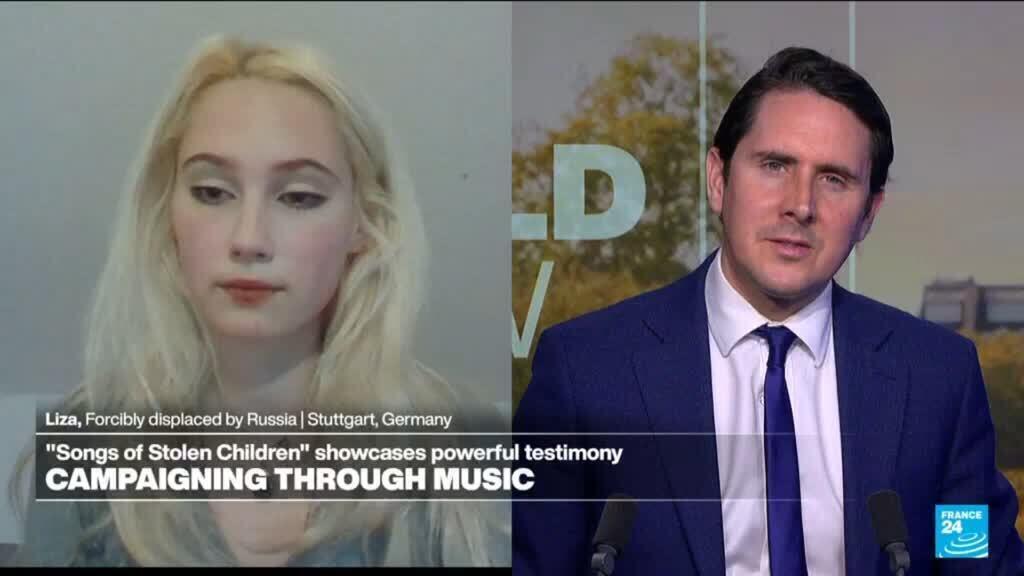
France 24's Gavin Lee is joined by Liza, a teenager who escaped Russia after being forcibly displaced from Ukraine. Around 20,000 children have been taken from their homes and sent to Russia or occupied territories. The International Criminal Court has issued an arrest warrant for President Putin over charges of unlawful deportation. While the Kremlin calls it a "humanitarian evacuation," independent investigators continue to uncover the truth. Nearly 1,900 children have been returned, but many remain missing. Liza, part of the Ukrainian music group Daughters of Donbass, shares her remarkable story.

31m
3 min
0
Read Article
À 80 ans, l'épicier Robin Blair dirige toujours l'entreprise familiale vieille de 150 ans
Lifestyle

À 80 ans, l'épicier Robin Blair dirige toujours l'entreprise familiale vieille de 150 ans

À 80 ans, Robin Blair dirige toujours l'épicerie familiale vieille de 150 ans, JJ Blair & Sons, à Darlington. Il travaille 6 jours par semaine, se levant à 4h30, et refuse de prendre sa retraite, guidé par le dicton familial : « Il y a deux chaises qui peuvent vous tuer dans la vie — la chaise électrique et le fauteuil. »

33m
6 min
1
Read Article
🎉

You're all caught up!

Check back later for more stories

Retour a l'accueil