M
MercyNews
Home
Back
Kitesurfer francés establece récord mundial durante la Tormenta Goretti
Deportes

Kitesurfer francés establece récord mundial durante la Tormenta Goretti

Le Figaro3h ago
3 min de lectura
📋

Hechos Clave

  • Clément Huot ejecutó con éxito un salto de kitesurf que duró 13 segundos, una duración que establece un nuevo estándar mundial para el deporte.
  • El atleta alcanzó una altitud máxima de 37 metros durante el salto, equivalente a la altura de un edificio de 12 pisos.
  • El récord se logró durante la Tormenta Goretti, aprovechando las condiciones excepcionales de viento de la tormenta para facilitar la proeza aérea masiva.
  • Este logro marca un hito significativo para el atleta bretón y la comunidad global de kitesurf.

Resumen Rápido

Clément Huot, un kitesurfer de Bretaña, ha redefinido los límites del deporte al establecer un nuevo récord mundial. La proeza se logró durante el pico de la Tormenta Goretti, un sistema meteorológico que proporcionó las condiciones perfectas, aunque peligrosas, para maniobras aéreas extremas.

El jueves, Huot utilizó los vientos fuertes de la tormenta para lanzarse al aire, permaneciendo en vuelo durante una duración sin precedentes. Este logro no solo muestra su habilidad excepcional, sino que también destaca el poder crudo de la naturaleza aprovechado para el rendimiento atlético.

La Proeza que Rompió el Récord

Los detalles del récord son tan sorprendentes como las condiciones bajo las cuales se lograron. Clément Huot logró permanecer en el aire durante un total de 13 segundos, una duración excepcionalmente larga para un salto de kitesurf. Durante este tiempo, alcanzó una altitud máxima de 37 metros, volando muy por encima del agua turbulenta.

Esta combinación de tiempo y altura establece un nuevo punto de referencia para la disciplina. Para poner esto en perspectiva:

  • 13 segundos de tiempo en el aire continuo es un punto de referencia en el deporte
  • 37 metros es equivalente a saltar desde un edificio de 12 pisos
  • La proeza requirió un tiempo y control precisos en medio de vientos de fuerza de tormenta

La ejecución de tal maniobra exige no solo fuerza física, sino también un conocimiento íntimo de la dinámica del viento generada por la tormenta.

Aprovechando la Tormenta 🌪️

La Tormenta Goretti proporcionó el combustible necesario para este intento de récord. Típicamente, los entusiastas de los deportes acuáticos evitan tales condiciones meteorológicas por preocupaciones de seguridad. Sin embargo, para un atleta de élite como Huot, las condiciones excepcionales de viento fueron una oportunidad única.

La tormenta creó un conjunto específico de circunstancias que permitieron saltos masivos:

  • Vientos sostenidos de alta velocidad
  • Patrones de ráfagas consistentes
  • Baja presión atmosférica

Al capitalizar estos elementos, Huot transformó un peligro potencial en un lugar deportivo de clase mundial. El éxito del intento subraya las capacidades evolutivas del equipo moderno de kitesurf y la naturaleza audaz de sus mejores competidores.

Un Hito para el Kitesurf

Este récord representa un momento significativo para la comunidad de kitesurf. Empuja los límites de lo que se consideraba posible con respecto al tiempo en el aire y la altitud. Clément Huot ha elevado efectivamente el techo para el deporte, desafiando a otros atletas a igualar o superar su rendimiento.

El logro atrae mayor atención a la destreza técnica y atlética requerida en el kitesurf moderno. Sirve como un testimonio de la dedicación de los atletas que entrenan específicamente para aprovechar las ventanas climáticas extremas para rendimientos que establecen récords.

Los límites del deporte se están probando constantemente, y este récord es una clara demostración de esa evolución.

Puntos Clave

El récord establecido por Clément Huot es un momento definitorio en la historia de los deportes extremos. Destaca la intersección de la meteorología, la tecnología y la habilidad humana. El éxito de este intento valida la estrategia de usar sistemas de tormenta para lograr proezas atléticas superlativas.

De cara al futuro, el mundo del kitesurf sin duda analizará los datos de este salto para entender la mecánica de tal vuelo. Este evento establece un nuevo estándar para lo que constituye un rendimiento de clase mundial en la disciplina.

  • Atleta: Clément Huot (Le Breton)
  • Condiciones: Tormenta Goretti
  • Altitud: 37 metros
  • Duración: 13 segundos

Preguntas Frecuentes

¿Quién estableció el nuevo récord mundial de kitesurf?

El atleta francés Clément Huot, de la región de Bretaña, estableció el nuevo récord mundial. Aprovechó los vientos fuertes de la Tormenta Goretti para lograr la proeza.

¿Cuáles son los detalles específicos del récord?

Huot permaneció en el aire durante 13 segundos y alcanzó una altura de 37 metros. Esta combinación de tiempo y altitud constituye un nuevo récord mundial para el deporte.

¿Por qué fue crucial la Tormenta Goretti para este logro?

La tormenta proporcionó las condiciones excepcionales de viento necesarias para un salto tan alto y de larga duración. El sistema meteorológico único permitió a Huot aprovechar la energía eólica que no está disponible durante las condiciones normales.

#Voile

Continue scrolling for more

La IA transforma la investigación y las demostraciones matemáticas
Technology

La IA transforma la investigación y las demostraciones matemáticas

La inteligencia artificial está pasando de ser una promesa a una realidad en las matemáticas. Los modelos de aprendizaje automático generan teoremas originales, forzando una reevaluación de la investigación y la enseñanza.

Just now
4 min
175
Read Article
How business leaders are responding to Trump's plan to cap credit card interest rates, from JPMorgan to SoFi
Politics

How business leaders are responding to Trump's plan to cap credit card interest rates, from JPMorgan to SoFi

Business leaders like Klarna's CEO support Trump's credit card cap proposal, while major banks and investors warn of risks. BRENDAN SMIALOWSKI/AFP via Getty Images Donald Trump proposes a 10% cap on credit card interest rates starting January 20, 2026. Business leaders like Klarna's CEO support the cap, while major banks and investors warn of risks. The proposal sparks debate on consumer protection, credit access, and industry profitability. Business leaders have mixed reviews of President Donald Trump's new plan for credit cards. In a post on Truth Social, Trump said on Friday he would call for a one-year cap of 10% on credit card interest rates, arguing that consumers are being "ripped off" by rates that he said can be as high as 20% or 30%. Congress, not the president, has the power to implement such a cap. Similar proposals have previously stalled on Capitol Hill. Major banks, including JPMorgan Chase, UBS, and Citi, warned that a 10% cap could reduce access to credit; others in the financial sector applauded the plan. Here is how business leaders have responded so far Sebastian Siemiatkowski Sebastian Siemiatkowski, CEO and cofounder of Klarna, at the fintech company's IPO on September 10. Bloomberg / Contributor / Getty Images/Reuters Klarna CEO Sebastian Siemiatkowski backs Trump's plan. Siemiatkowski told CNBC in an interview on Monday that traditional credit cards are built to encourage consumers to put most of their spending on credit, and then carry big balances at steep interest rates. That dynamic, he said, pushes people to borrow more than they should and results in higher losses, especially among lower-income borrowers. "I think Trump is wise here and is proposing something that makes a lot of sense," Siemiatkowski told CNBC on Monday. "Capitalism is great, but anarchy is not," Siemiatkowski added regarding consumer protection. In another interview with CNN, Siemiatkowski also said that credit card rewards like cash back and airline miles largely benefit wealthier consumers while lower-income cardholders shoulder more of the costs. Jeremy Barnum JPMorgan Chase CFO Jeremy Barnum speaks at the bank's 2025 Investor Day presentation in New York City on May 19. JPMorgan 2025 Investor Day JPMorgan's CFO said that Trump's plan could upend the company's business model. "It's a very competitive business, but we wouldn't be in it if it weren't a good business for us," said Jeremy Barnum during the company's fourth-quarter earnings call. "And in a world where price controls make it no longer a good business, that would present a significant challenge." JPMorgan said on its fourth-quarter earnings call that debit and credit card sales volume rose roughly 7% year over year and described the business as central to its retail-focused offerings. Jamie Dimon JPMorgan CEO Jamie Dimon. Alexander Tamargo/Getty Images for America Business Forum The CEO of JPMorgan also weighed in on Trump's credit card proposal. Jamie Dimon told investors on the company's fourth-quarter earnings call that reducing card interest rates could adversely affect customers with lower credit scores by limiting access to credit. "If it happened the way it was described, it would be dramatic," Dimon said. Bill Ackman PATRICK T. FALLON/AFP via Getty Images "This is a mistake, President," Bill Ackman, the billionaire CEO of Pershing Square Capital Management, wrote on Friday on X in a now-deleted post. "Without being able to charge rates adequate enough to cover losses and to earn an adequate return on equity, credit card lenders will cancel cards for millions of consumers who will have to turn to loan sharks for credit at rates higher than and on terms inferior to what they previously paid," Ackman added. Ackman said in another post on Saturday that although Trump's goal is one that's "worthy and important," the rate cap is not the way to achieve it. "The best way to bring down rates would be to make it more competitive by making the regulatory regime more conducive to new entrants and new technologies," Ackman wrote. Anthony Noto Mike Ehrmann/TGL/TGL Golf via Getty Images The SoFi CEO believes that his business and consumers could stand to benefit from Trump's credit card rate cap. "If this is enacted — and that's a big if, though part of me hopes it is — we would likely see a significant contraction in industry credit card lending," Anthony Noto wrote in a post on X. "Credit card issuers simply won't be able to sustain profitability at a 10% rate cap." "Consumers, however, will still need access to credit. That creates a large void — one that @SoFi personal loans are well positioned to fill," Noto added. Noto also said that personal loans could be an alternative to addressing debt, though that would make underwriting discipline and borrower education "even more important." Read the original article on Business Insider

2h
3 min
0
Read Article
Politics

Tanzania: Inside Mwanza's deadly post-election crackdown

What happened in Tanzania during the unrest that followed the October election remains unclear. New evidence points to killings and grave human rights abuses by security forces in the second largest city, Mwanza.

2h
3 min
0
Read Article
El enfoque de Putin en Ucrania expone a sus aliados globales
Politics

El enfoque de Putin en Ucrania expone a sus aliados globales

A un año del conflicto, los aliados autoritarios descubren que sus lazos con Rusia son un tigre de papel, con un apoyo que no se materializa cuando más se necesita.

2h
5 min
7
Read Article
Animoca adquiere Somo mientras el mercado NFT muestra signos de recuperación
Technology

Animoca adquiere Somo mientras el mercado NFT muestra signos de recuperación

Animoca Brands ha adquirido Somo, una movida estratégica que señala renovada confianza en el mercado NFT mientras la actividad comercial muestra signos tempranos de recuperación en 2026.

2h
5 min
6
Read Article
China's much-hyped radars appear to have been of little help when the US launched its massive air assault against Venezuela
World_news

China's much-hyped radars appear to have been of little help when the US launched its massive air assault against Venezuela

China's JY-27A radar didn't appear to be effective during the US raid on Venezuela. US Air Force Photo Venezuela's Chinese air defense radars weren't game-changing during the US raid to capture Maduro. China has touted the effectiveness in combat of radars like its JY-27A. The lack of effect recently raises questions about both the radar and their operators. Venezuela's military had Chinese-made anti-aircraft radars available when the US launched a surprise air assault against the country to capture the country's now-former leader, Nicolás Maduro, earlier this month. They appear to have been of little help. Operation Absolute Resolve involved over 150 US military aircraft, none of which were shot down. A helicopter was hit, reportedly by machine gun fire, but remained operational. Venezuela has a number of China's JY-27A mobile radars, which Beijing has touted as top-of-the-line systems. It has said the radar can detect stealth assets, like the American F-22 and F-35, from over 150 miles away. The success of the surprise raid by US special operators into downtown Caracas, part of a larger mission which involved not only stealth airpower but also older fourth-generation aircraft and helicopters, suggests that something didn't go as planned on defense. That may be on the operators rather than the tech though. After the raid, a Japanese reporter asked a Chinese foreign ministry spokesperson what Beijing thought about the "large amount of military equipment" China sold Venezuela apparently being "of little practical use." The Chinese spokesperson responded by condemning the US strike. A destroyed air defense unit at a Venezuelan military base. Leonardo Fernandez Viloria/REUTERS The Chinese-made JY-27A is a long-range radar used for detecting and tracking hostile aircraft in protected airpsace. Introduced in 2014, the radar system consists of a radar mast with multiple antenna panels supported by separate radar and control vehicles. Chinese sources claim it has features designed to reduce jamming. A newer version, the JY-27V, has since been developed. When Venezuela purchased JY-27As from China last year, there were claims that the radars were able to lock onto multiple F-35B fighter jets off the Venezuelan coast, presenting a potential challenge to the one-way transparency advantage of the US military. "That's all well and good," Michael Sobolik, a senior fellow at the Hudson Institute, told Business Insider, "but when it really matters is in a moment of conflict." Perhaps they were unable to withstand sophisticated electromagnetic spectrum attacks, or maybe they were improperly utilized by their operators. Either way, if they weren't effective, they were of little use for air defense. Radar systems are what inform air defense crews on what they'll need to target and what weapons they need to use. "If you don't have functioning radars then you're a sitting duck," he said. US military leaders said that American aircraft were able to overwhelm Venezuelan air defenses, which has been assessed to include a range of Russian-made systems like S-300VM batteries, Buk-M2 systems, and older S-125 Pechora-2M launchers, as well as the Chinese radars. Some of these pieces are capable but aren't the newest variants used by their respective exporters. In the aftermath, Secretary of Defense Pete Hegseth mocked the effectiveness of the Russian air defenses. Nothing was said about the Chinese radars in that speech. Key to air defense is how the network works together, and the effectiveness of the operator is vital. In Venezuela's case, it may have been lacking the necessary conditions for successful air defense operations. Seven US troops were hurt during the raid in Venezuela over the weekend, a defense official said. US Air Force photo by Airman 1st Class Isabel Tanner A study from the Miami Strategic Intelligence Institute think tank, which hosts experts on Latin America, assessed Venezuela's air defenses as being in critical condition as of last year. It said that over 60% of its radar fleet was non-operational, combat aviation doesn't fly often, and the country has received little maintenance support and spare parts from its exporters. Venezuela purchased Chinese-made radars and Russian-made surface-to-air missile batteries to modernize its air defenses, but the hardware alone can't make up for internal shortcomings. Analysis by The New York Times found that some of Venezuela's air defense equipment was in storage or not operational, leaving it unprepared for the US attack. Reports also indicated Venezuela's military lacked the spare parts and technical background to keep air defense systems running. Even if the failures are on the part of the Venezuelan military, the ineffective performance of the Russian and Chinese systems sends a "pretty big message," Sobolik said. It elevates confidence in US capabilities while raising questions about those of rivals. US officials said no American aircraft or military personnel were lost during the raid on Venezuela. Of the 150 aircraft and almost 200 American troops involved in the mission, one helicopter took fire and seven troops were injured. Read the original article on Business Insider

3h
3 min
0
Read Article
¿Resistencia a la IA? La solución de la semana laboral de 4 días
Technology

¿Resistencia a la IA? La solución de la semana laboral de 4 días

Mientras las empresas invierten millones en IA, muchos trabajadores resisten la tecnología. Autores argumentan que compartir ganancias con una semana laboral más corta podría ser la clave para la adopción.

3h
5 min
5
Read Article
François de Rugy respalda a candidato de derecha en Nantes
Politics

François de Rugy respalda a candidato de derecha en Nantes

François de Rugy, ex presidente de la Asamblea Nacional francesa, ha respaldado al candidato de derecha y centro Foulques Chombart de Lauwe para las elecciones municipales en Nantes.

3h
5 min
6
Read Article
Gaza: Hypothermia kills 5 as blockade hinders aid
World_news

Gaza: Hypothermia kills 5 as blockade hinders aid

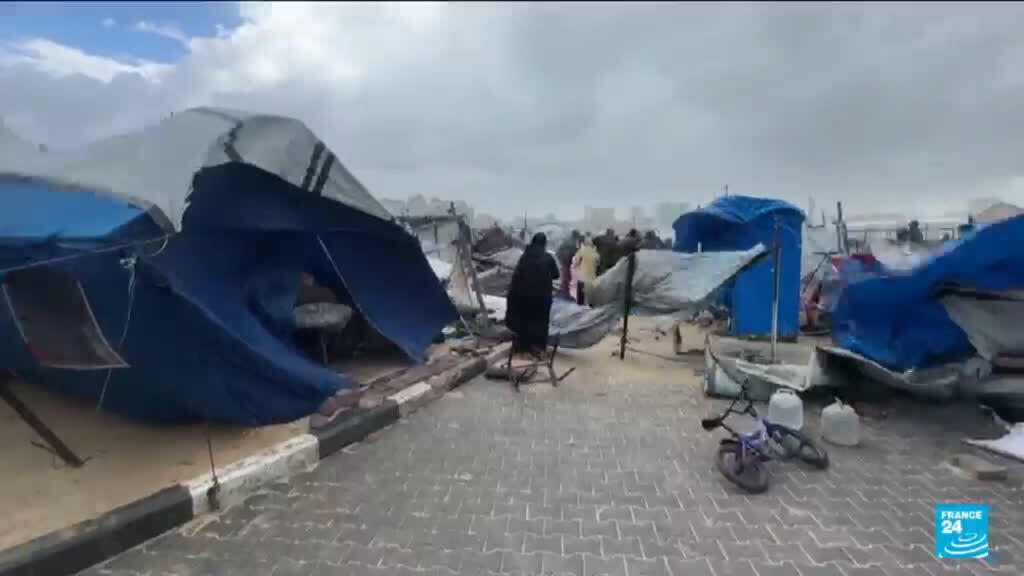
Despite the ceasefire, conditions in Gaza remain perilous for many residents, with UNICEF reporting that more than 100 children have been killed by military action since the truce began. Large numbers of people are living in makeshift tent camps that offer little protection from harsh weather, while many buildings remain structurally unsafe following Israeli bombardments. On Tuesday, at least four people were killed when a wall collapsed onto their tent in Gaza. Ellen Gainsford reports.

3h
3 min
0
Read Article
El giro estratégico de Meta: Recortes en Reality Labs
Technology

El giro estratégico de Meta: Recortes en Reality Labs

Meta recorta 1,000 empleos en Reality Labs en un giro estratégico hacia dispositivos portátiles de IA, dejando atrás las ambiciones del metaverso.

3h
5 min
10
Read Article
🎉

You're all caught up!

Check back later for more stories

Volver al inicio