M
MercyNews
Home
Back
Alex Honnold conquista el Taipei 101 sin equipo de seguridad
Deportes

Alex Honnold conquista el Taipei 101 sin equipo de seguridad

Le Figaro1h ago
3 min de lectura
📋

Datos Clave

  • El escalador estadounidense Alex Honnold completó con éxito el ascenso libre del rascacielos Taipei 101 el 25 de enero de 2026.
  • La torre Taipei 101 tiene 1,667 pies de altura, lo que la convierte en uno de los edificios más altos del mundo.
  • Honnold completó el ascenso completo sin ningún equipo de seguridad, cuerdas o equipo de protección.
  • Cientos de espectadores se reunieron en el suelo para observar el histórico ascenso en tiempo real.
  • El ascenso tuvo lugar en Taipéi, la capital de Taiwán, en el corazón de una importante área metropolitana.
  • Este ascenso representa un hito significativo en la disciplina del escalada libre sin cuerdas.

Una Hazaña a Gran Altura

El 25 de enero de 2026, el mundo observó cómo el escalador estadounidense Alex Honnold ejecutaba uno de los ascensos libres más audaces en la memoria reciente. El lugar fue el Taipei 101, un imponente rascacielos en Taiwán que se erige como un símbolo de la ingeniería moderna.

Honnold escaló la estructura de 1,667 pies sin ningún equipo de seguridad, cuerdas o equipo de protección. No fue un ascenso controlado en interiores, sino un ascenso en el mundo real de uno de los edificios más altos del mundo, realizado a plena vista del público.

El ascenso tuvo lugar un domingo, atrayendo a cientos de curiosos que se reunieron para presenciar el espectáculo. Para muchos, fue una oportunidad única en la vida de ver a un maestro del oficio empujar los límites del potencial humano.

El Ascenso

El rascacielos Taipei 101 es una maravilla arquitectónica, conocida por su distintivo diseño inspirado en pagodas y su papel como hito mundial. Escalar una estructura de este tipo presenta desafíos únicos, desde la verticalidad pura de la fachada de vidrio y acero hasta las condiciones climáticas impredecibles a gran altura.

El enfoque de Honnold para el ascenso fue metódico y preciso, como es su marca registrada. Navegó por el exterior del edificio usando solo sus manos y pies, encontrando presas y grietas en la arquitectura que soportarían su peso. El ascenso completo fue un testimonio de años de entrenamiento y preparación mental.

Elementos clave del ascenso incluyeron:

  • Más de 1,600 pies de ganancia de elevación vertical
  • Exposición al viento y al clima en la cima
  • Características arquitectónicas complejas que requieren habilidad técnica
  • Observación pública constante desde el suelo

El ascenso culminó en la cima del Taipei 101, donde Honnold llegó a la parte superior de la torre. Desde este punto de vista, habría podido ver la extensa ciudad de Taipéi y el paisaje circundante.

"¡Fue increíble!"

— Espectador en Taipei 101

Espectáculo Público

Lo que hizo que este ascenso fuera particularmente notable fue la naturaleza pública del evento. A diferencia de los ascensos a montañas remotas que ocurren en aislamiento, este ascenso se desarrolló en el corazón de una importante área metropolitana. Cientos de personas se reunieron abajo, observando el progreso del escalador con una mezcla de asombro y preocupación.

La reacción de la multitud capturó el peso emocional del momento. Se escuchó a un observador exclamar, "¡Fue increíble!". Este sentimiento fue ecoado por muchos que presenciaron el ascenso, mientras observaban a una figura humana hacer su camino por el lado de una estructura masiva.

La ubicación misma añadió al drama. Taipéi, la capital de Taiwán, es una ciudad bulliciosa de millones de habitantes. Que un evento deportivo extremo tuviera lugar en su núcleo urbano creó una intersección única entre deportes de aventura y vida urbana.

¡Fue increíble!

Para los espectadores, esto fue más que un simple ascenso: fue una demostración de coraje y capacidad humana que trascendió los límites típicos del deporte.

Perfil del Escalador

Alex Honnold es ampliamente reconocido como uno de los escaladores más destacados del mundo, particularmente en la disciplina de la escalada libre sin cuerdas. Esta forma de escalar implica ascender sin cuerdas ni equipo de seguridad, dependiendo completamente de la habilidad, fuerza y enfoque mental del escalador.

Su reputación en la comunidad escaladora se basa en una serie de ascensos innovadores que han empujado los límites de lo que se consideraba posible. Cada ascenso requiere una planificación meticulosa, un estudio extensivo de la ruta y un conocimiento íntimo tanto de las demandas físicas como psicológicas del deporte.

Aspectos clave del enfoque de Honnold incluyen:

  • Ensayo extensivo de rutas y memorización
  • Acondicionamiento físico para resistencia y fuerza
  • Preparación mental y técnicas de enfoque
  • Evaluación exhaustiva de las condiciones ambientales

El ascenso del Taipei 101 representa otra entrada significativa en su portafolio de logros, demostrando su evolución continua como atleta y su compromiso con explorar los límites de la escalada libre sin cuerdas.

Impacto Global

El ascenso ha generado una atención significativa en la comunidad deportiva global y más allá. Destaca la creciente intersección entre los deportes extremos y la cultura mainstream, donde las hazañas de resistencia humana capturan la imaginación de audiencias en todo el mundo.

Desde una perspectiva deportiva, el ascenso del Taipei 101 añade al legado de la escalada libre sin cuerdas como una disciplina legítima y respetada. Demuestra la capacidad del deporte para innovar y su habilidad para encontrar nuevos desafíos en lugares inesperados.

El evento también subraya la importancia de:

  • El logro individual en los deportes extremos
  • El papel del espectáculo público en el atletismo moderno
  • Los desafíos tecnológicos y arquitectónicos en la escalada
  • La conectividad global para compartir logros deportivos

A medida que la comunidad escaladora continúa evolucionando, ascensos como este sirven como puntos de referencia para lo que es posible, inspirando tanto a escaladores experimentados como a recién llegados al deporte.

Viendo Hacia el Futuro

El ascenso del 25 de enero de 2026 del Taipei 101 por Alex Honnold se erige como un logro notable en el mundo de los deportes extremos. Representa la culminación de años de entrenamiento, preparación y un profundo compromiso con empujar los límites personales.

Para la comunidad escaladora y los entusiastas del deporte en todo el mundo, este ascenso sirve como un recordatorio de las capacidades extraordinarias que existen en los niveles más altos del rendimiento humano. También plantea preguntas sobre el futuro de la escalada libre sin cuerdas y qué nuevos desafíos podrían estar por delante.

A medida que el polvo se asienta en este histórico ascenso, las imágenes y los recuerdos continuarán inspirando. La visión de un escalador ascendiendo uno de los edificios más altos del mundo sin equipo de seguridad es un poderoso testimonio del potencial humano y el atractivo perdurable de los deportes extremos.

Preguntas Frecuentes

¿Qué logró Alex Honnold el 25 de enero de 2026?

Alex Honnold realizó el ascenso libre del rascacielos Taipei 101 en Taiwán, escalando la torre de 1,667 pies sin ningún equipo de seguridad o cuerdas. El histórico ascenso fue presenciado por cientos de espectadores en el suelo abajo.

#Flash Actu

Continue scrolling for more

La IA transforma la investigación y las demostraciones matemáticas
Technology

La IA transforma la investigación y las demostraciones matemáticas

La inteligencia artificial está pasando de ser una promesa a una realidad en las matemáticas. Los modelos de aprendizaje automático generan teoremas originales, forzando una reevaluación de la investigación y la enseñanza.

Just now
4 min
388
Read Article
El universo salvaje de los festivales de música
Entertainment

El universo salvaje de los festivales de música

El dúo fotográfico The Kids Are Right documenta los universos de los festivales Motorbeach y Wheel and Waves en el libro 'Quimera: Antología de una vida salvaje', un testimonio de libertad y fraternidad.

9m
3 min
9
Read Article
I'm a co-creator of Alexa. Writing a 6-page memo helped me decide to quit Amazon and launch my own AI startup.
Technology

I'm a co-creator of Alexa. Writing a 6-page memo helped me decide to quit Amazon and launch my own AI startup.

William Tunstall-Pedoe is the founder and CEO of UnlikelyAI. Courtesy of William Tunstall-Pedoe William Tunstall-Pedoe founded True Knowledge, later Evi, which Amazon acquired to build Alexa. He left Amazon in 2016 after almost four years at the tech giant to re-enter the startup world. He used a six-page memo to decide whether he should leave Amazon. This as-told-to essay is based on a conversation with William Tunstall-Pedoe, 56, a founder and CEO. Amazon's acquisition of his startup and his role at Unlikely AI have been verified by Business Insider. This piece has been edited for length and clarity. I helped create Alexa, a product that everyone has heard of and most people have used. I'm proud of what we built. But by 2016, it was clear that leaving Amazon, which I joined after the company acquired my startup, was the right decision. Continuing to work on Alexa would have been a very different job from building and launching startups, which I love to do. Do you work in AI? If you're comfortable speaking about it with a Business Insider reporter, please fill out this quick form. We want to hear from people who made a mid-career switch into the industry. I wanted to build something that would change the world When I was 13, I would go to a college next to my school to use their mainframe, and since then I've been excited by computers and pushing the boundaries of what's possible with software. I studied computer science at the University of Cambridge and taught there after graduating in 1991, but I felt better suited to entrepreneurship than to academia. If you create something genuinely new in software, it can be on a billion smartphones in six months and truly change the world. That's impact. I set out to solve what I saw as a big problem. Internet search relied on users guessing keywords to get results, rather than asking natural questions like we learn to do as children. I imagined a world where you could have that same kind of conversation with computers, which led me to found True Knowledge in 2006. Joining Amazon was the right decision Initially, we tried to build a search engine that would compete with Google, which didn't work. Then, we enabled other companies to integrate our search engine into their own products — but the larger companies didn't. For a time, we focused on SEO. The final pivot was building a voice assistant. We created an application called Evi, which launched in the UK in 2012, a year after Apple introduced Siri. We renamed the company from True Knowledge to Evi to match our product. As a 30-person startup, we suddenly found ourselves competing with the world's most valuable company. We spent much of that year talking to major players in tech about being acquired. Later in 2012, Amazon bought our company. William Tunstall-Pedoe joined Amazon after his startup, Evi, was acquired by the tech giant. Courtesy of William Tunstall-Pedoe Joining Amazon was the right decision. The company invested heavily in the city of Cambridge, where Evi was based, and turned our startup into a major Amazon office. Our voice assistant became one of the company's biggest and most exciting secrets. Moving from running a small startup to working inside a business with hundreds of thousands of employees, with Jeff Bezos at the top, was a big change, but I loved working there. I split my time between Amazon's offices in Seattle and Cambridge, and enjoyed going back and forth, making things happen. When we launched Alexa, we were taken aback by the response. It was instantly successful. Today, Alexa is a household name. I'm immensely proud of the Evi team. I wrote a memo to decide whether to leave Amazon Amazon is known for using six-page memos instead of PowerPoint presentations to promote clarity of thought. In 2016, I wrote one to help me decide if I should leave Amazon. In the memo, I laid out these facts: I'd delivered everything I could, the acquisition had been an unambiguous success, and so too had the product. At the time, thousands of people were working on Alexa. After about three and a half years at Amazon, in 2016, it was time to go. I wanted to re-enter the startup world. Startups can be better-suited to exploring unconventional ideas It's certainly possible to launch something new within a big organization, and there are real advantages to doing so. When we launched Alexa, it immediately appeared on the front page of Amazon.com, a level of exposure that most startups could only dream of. I expect I'll work at a big company again at some point in my career. But if you're trying to do something novel or contrarian, a startup is often better suited. Within a large company, all it takes is one manager deciding that resources are better spent elsewhere for a project to die. At a startup, it's the opposite. Even if 99 venture capitalists say no, you only need one investor to say yes to keep the project alive. William Tunstall-Pedoe became an angel investor after leaving Amazon. Courtesy of William Tunstall-Pedoe After Amazon, I spent time mentoring at startup incubators such as Creative Destruction Lab. Through that, I became an active angel investor, which gave me a broad perspective of the many ways startups succeed and fail. In 2019, I launched Unlikely AI, a deeptech startup focused on building neurosymbolic AI. The goal is to combine the powerful but sometimes incorrect machine-learning models with the world of algorithms, where computers are almost always right. The mission of the business is about making AI trustworthy and reliable. As CEO, I'm constantly swamped. Running a startup can be stressful, but working on something truly big and ambitious is incredibly exciting. I sometimes feel nostalgic about working inside a big organization, but I love being in the startup world. For me, leaving Amazon was the right decision. I don't regret it. Read the original article on Business Insider

13m
3 min
0
Read Article
Warren Buffett warned debt can ruin your life — and praised his dad's parenting when he was 'behaving like a jerk'
Economics

Warren Buffett warned debt can ruin your life — and praised his dad's parenting when he was 'behaving like a jerk'

Warren Buffett built his fortune through long-term investing at his firm, Berkshire Hathaway. Johannes EISELE / AFP via Getty Images Warren Buffett warned about the dangers of debt in his last TV interview as Berkshire Hathaway CEO. He also gave advice about parenting, making mistakes, picking a job, and lifelong learning. Buffett said his dad was "very forgiving" when he misbehaved, but told him, "You can do better." Warren Buffett warned about the perils of personal debt in a rare interview last May that aired last week. The famed investor, 95, also offered timeless advice about parenting, moving on from mistakes, choosing a job, and living a full life during the two-hour CNBC special titled: "Warren Buffett: A Life and Legacy." Many people "love spending beyond their income" by racking up credit-card debt, but that's a path to ruin, Buffett said. "The rest of your life, you're underwater, and why in the hell do you want to be underwater?" The self-made billionaire said that people who aren't worried about money tend to be "quite a bit happier" than those who are. There's "nothing magic" about managing your finances, he added. "You just have to think a little and use a little discipline." Buffett acknowledged that teenagers and college students aren't "inclined to use a lot of discipline," but he still gives them the same advice: "Don't get in debt." "And beyond a certain point, if you get in a hole or anything, it is difficult to dig out, isn't it?" he said. "It's impossible, and I give credit to people who do it. But do it the easy way." One exception is taking a mortgage out on a house, but even then you "have to be careful," Buffett said. Parents should set a good example "My dad was always very forgiving of my misbehavior," Buffett said about Howard Buffett Sr., an Omaha stockbroker and four-term Republican congressman. "He'd just say, 'I know you can do better.'" Buffett said that was "very powerful stuff" because his father was right, and the young Buffett knew it. He recalled "behaving like a jerk for a long time," and said it was "nice to have somebody have faith in you." The legendary stock-picker, who recently stepped down as Berkshire Hathaway's CEO after more than 50 years in charge, praised his three children, whom he's tasked with disbursing virtually all of his vast fortune to good causes. "If you want to have good children, be a good parent," Buffett said. "You don't give them lectures about doing bad things when you're doing the bad things, and they're actually just acting like teenagers." Buffett said his kids — Susan, Howard Jr., and Peter — "didn't have to watch hypocrisy" growing up, as he and their mother largely lived up to the values they taught them. "They never saw us behave like we were extremely rich or anything, although they saw us fly off to New York and do different things, and we had plenty of fun," he said. The trio witnessed Buffett's intensity at work and pride in his investment returns, but they "didn't see us craving money just to say to other people: 'Look, I've got money, and you don't, ha ha ha,'" he said. Buffett said his children "did a lot of crazy things, but of course I did too." He said that people should be "very forgiving" to themselves and not dwell on their past missteps, as they can't be changed and "nobody cares." He said they should focus instead on improving their behavior going forward, as the "second half of your life should be better than your first half" as you grow wiser with age. The right job provides more than a paycheck Buffett, who's joked that he "tap dances to work" because he enjoys his job so much, repeated his trademark advice to pursue a career in what you love. "Look for the job you'd take if you didn't need a job," he said, where the "fact you get a paycheck is incidental to what you're doing." Buffett, famously a voracious reader, said that one can "learn a lot of things out of a book," but real-life experience is crucial too. "You can't have your heart broken by reading a book when you're three or four years old, or having it read to you," he said. Nor can you experience the "thrill" and "exhilaration" that come with "accomplishing something until you actually do it," he added. Reflecting on his own life, Buffett said he was lucky to be born in the US, live into his 90s, stay generally healthy, and have "all kinds of interesting experiences." "I mean, you won the lottery," he said. Read the original article on Business Insider

16m
3 min
0
Read Article
Aprenda receita de creme de feijão na moranga, prato turístico do Paraná
Lifestyle

Aprenda receita de creme de feijão na moranga, prato turístico do Paraná

Tradição em Ponta Grossa: aprenda a preparar creme de feijão na moranga O Caminhos do Campo acompanhou a preparação de uma receita simples e típica da região de Ponta Grossa, nos Campos Gerais do Paraná: o creme de feijão na moranga. O prato é servido em um dos pontos turísticos da região, a Cachoeira da Mariquinha. A chef de cozinha Valéria Glapinski é quem ensina o passo a passo do prato, que leva ingredientes simples. Ingredientes Feijão na Moranga Reprodução/RPC 1 kg de feijão preto; Legumes variados (a gosto): cenoura, batata, beterraba, abobrinha, chuchu e mandioca; 1 cebola grande picada; Dentes de alho-roxo picados; 1 unidade de alho-poró fatiado; Sal a gosto; 1 moranga média (inteira); Modo de preparo Na panela de pressão ou em uma panela de ferro, cozinhe o feijão junto com os legumes escolhidos até ficarem bem macios. Após o cozimento, bata o feijão e os legumes no liquidificador até obter uma mistura homogênea. Reserve. Em outra panela, refogue o alho, a cebola e o alho-poró. Em seguida, despeje a mistura de feijão batida. Retire o miolo e as sementes da moranga e leve para assar por aproximadamente 50 minutos a 180º. Não é preciso temperar. Por fim, adicione o creme de feijão à moranga e sirva. VÍDEOS: Mais assistidos do g1 Paraná Leia mais notícias em g1 Paraná.

19m
3 min
0
Read Article
Mastering eBay: Vintage Fashion Buyers Share Their Top Shopping Hacks
Lifestyle

Mastering eBay: Vintage Fashion Buyers Share Their Top Shopping Hacks

Two dedicated vintage fashion shoppers reveal the meticulous strategies they use to navigate eBay's vast marketplace, transforming the hunt for unique clothing into an art form.

20m
5 min
1
Read Article
EY exec says he has a 'high sensitivity' for detecting AI. Here's what gives it away.
Technology

EY exec says he has a 'high sensitivity' for detecting AI. Here's what gives it away.

Joe Depa is the global chief innovation officer at EY. EY EY's global chief innovation officer Joe Depa said he has a "high sensitivity" for detecting AI. He leads the firm's AI strategy but said if people use it "too much," it may be less effective. Corporate-sounding writing or hedging suggestions is usually a sign of AI, he said. AI is getting better every day — but EY's global chief innovation officer told Business Insider there are still signs that reveal an AI-generated response. Depa leads the Big Four firm's global AI, data, and innovation strategy, and part of his job involves overseeing how employees integrate AI. That vantage point has given Depa what he calls a "high sensitivity" for detecting AI-generated work. While he's all in on the technology and doesn't have set limits on how often employees should use it, he said AI should be used to amplify human creativity, not replace it. He said there are situations where "it's too much AI," and the person hasn't "infused any of their own original thoughts." In that case, "there does become a point of AI becoming a little bit less efficient or effective," Depa said. The executive added that it's important to maintain a sense of individuality and style so that everyone doesn't sound the same. As companies urge employees to adopt AI, Depa's comments underscore the fine line employees walk between using the technology as a tool and depending on it too heavily. Even if workers want their bosses to know they're keeping up with the latest tech, they may not want them to know just how much they're relying on it. In a Business Insider survey with 220 respondents, 40% said "yes" or "sometimes" when asked whether they hide or downplay their AI use at work. Depa said he notices a few signs that point to AI-generated responses, including mistakes. While AI tools have improved significantly, they can still hallucinate. Here are a few other writing- and presentation-specific examples that point to AI, according to Depa: Signs in writing When it comes to written communication, Depa said there are a few signals that indicate it was generated by AI with minimal human oversight or input. One of the most common is neutral and overly formal writing. He added that AI-generated writing may lack personal aspects, emotion, and humor. The writing may also be too polished, with no shifts in pattern, structure, or flow. He said AI-generated writing tends to be generic or corporate-sounding, sometimes relying too heavily on buzzwords and descriptors. Another red flag is repetitive language, such as relying on the same phrases or sentence structures to open multiple sentences or paragraphs. In general, Depa advises his teams to write their own content with the bullets and messaging they want to convey, and then ask an AI tool to refine it. If used correctly, Depa said AI tools can challenge your thinking. "If you write it yourself first and then ask for the enhancement using AI, I feel like that's much more productive," Depa said. Signs in presentations In presentations, Depa said an over-reliance on AI results in surface-level insights that lack specific examples. Another giveaway is when topics are addressed too broadly, with little consideration for the audience. He also flagged "hedging," which he said AI does by design. He said AI often steers away from clear recommendations and presents alternatives. "Anytime you see vagueness or general statements that don't really tell you anything, I would often say that's AI," Depa said. Read the original article on Business Insider

25m
3 min
0
Read Article
Luka Doncic brilla en su regreso a Dallas mientras los Knicks triunfan
Sports

Luka Doncic brilla en su regreso a Dallas mientras los Knicks triunfan

Luka Doncic brilla en su regreso a Dallas y Jalen Brunson lidera a los Knicks a una victoria clave en la NBA, destacando el impacto de las estrellas en partidos cruciales.

27m
3 min
1
Read Article
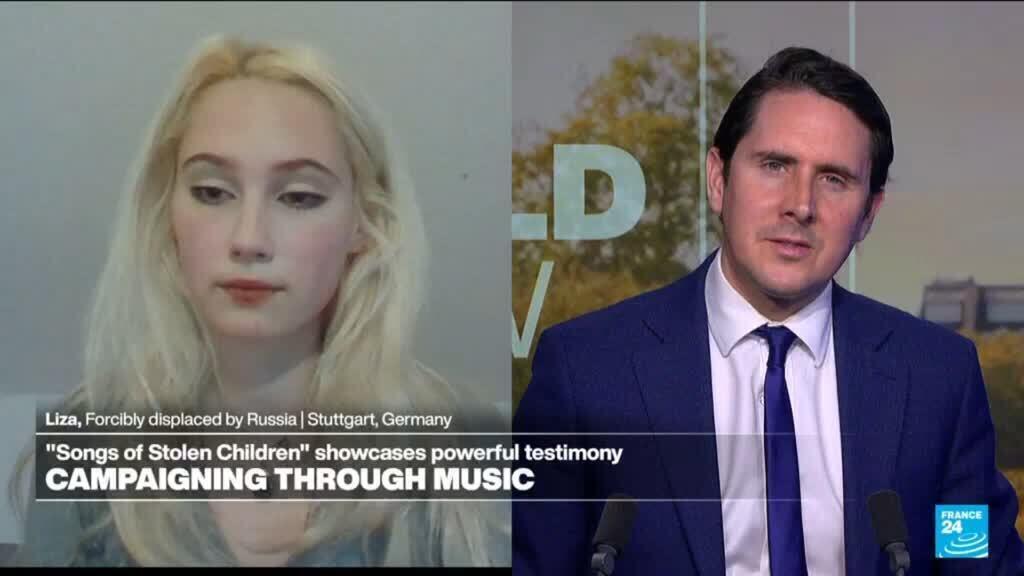
‘Singing for Stolen Children’ Escaping Russian Abduction. A Ukrainian teeenager’s account.
World_news

‘Singing for Stolen Children’ Escaping Russian Abduction. A Ukrainian teeenager’s account.

France 24's Gavin Lee is joined by Liza, a teenager who escaped Russia after being forcibly displaced from Ukraine. Around 20,000 children have been taken from their homes and sent to Russia or occupied territories. The International Criminal Court has issued an arrest warrant for President Putin over charges of unlawful deportation. While the Kremlin calls it a "humanitarian evacuation," independent investigators continue to uncover the truth. Nearly 1,900 children have been returned, but many remain missing. Liza, part of the Ukrainian music group Daughters of Donbass, shares her remarkable story.

31m
3 min
0
Read Article
A los 80 años, el frutero Robin Blair sigue dirigiendo el negocio familiar de 150 años
Lifestyle

A los 80 años, el frutero Robin Blair sigue dirigiendo el negocio familiar de 150 años

A los 80 años, Robin Blair sigue levantándose a las 4:30 a.m. para dirigir la frutería familiar fundada en 1875. Se niega a jubilarse, guiado por un lema familiar que advierte contra la 'silla de brazos'.

33m
6 min
1
Read Article
🎉

You're all caught up!

Check back later for more stories

Volver al inicio