Quick Summary
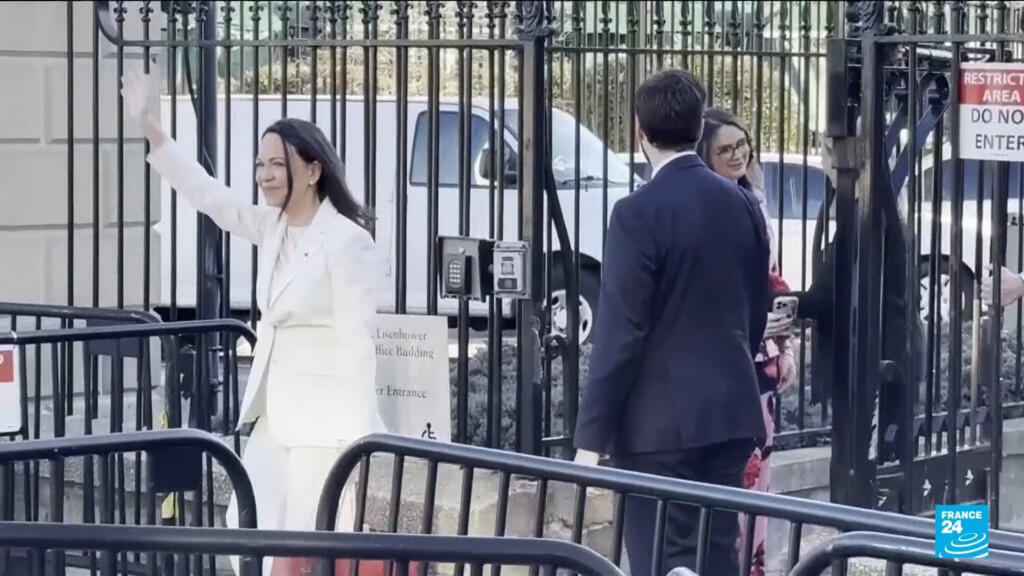
- 1On January 15, Venezuelan opposition leader Maria Corina Machado met with President Donald Trump at the White House in Washington.
- 2During the meeting, Machado presented her Nobel Peace Prize to Trump as a symbolic gesture.
- 3The opposition leader, who was previously barred from running against former Venezuelan President Nicolas Maduro, appeared encouraged by U.
- 4Despite the gesture, the U.
A Symbolic Gesture
On January 15, a significant diplomatic encounter took place at the White House in Washington. Maria Corina Machado, a prominent leader of Venezuela's political opposition, met with President Donald Trump in a meeting that carried both personal and geopolitical weight.
The meeting represented a pivotal moment for Machado, who has been a steadfast critic of the Venezuelan government. Her visit to the White House was marked by a dramatic and symbolic act intended to underscore her commitment to her cause and her nation's future.
The White House Meeting
Machado entered the White House with a clear objective. Having been barred from running against former Venezuelan President Nicolas Maduro in past elections, she has long been a figure of resistance. Her visit was reportedly buoyed by the significant U.S. involvement in the region's political dynamics.
During their conversation, Machado presented President Trump with her Nobel Peace Prize. This act was intended as a powerful symbol of her dedication to the cause of freedom and democracy in Venezuela. The gesture was reportedly received with appreciation by the U.S. president.
She presented Trump with her Nobel Peace Prize, a gesture that moved the White House occupant.
The meeting, however, was not solely about symbolic exchanges. It occurred within a broader context of U.S. policy toward Venezuela, which has involved recognizing a transitional government.
"She presented Trump with her Nobel Peace Prize, a gesture that moved the White House occupant."— Source Content
The Political Landscape
The backdrop to this meeting is a complex and deeply entrenched political struggle. Maria Corina Machado has faced significant obstacles in her political career, including being legally prevented from challenging Nicolas Maduro for the presidency. Her resilience has made her a key figure for the Venezuelan opposition.
Despite the personal nature of the gift to President Trump, the U.S. administration's diplomatic strategy has followed a different path. The United States has formally recognized Delcy Rodriguez as the interim president of Venezuela. Rodriguez is a former close ally of Maduro, having served as his "second hand," and her appointment was a strategic decision by Washington.
This creates a nuanced diplomatic picture where personal gestures and official policy coexist. The U.S. continues to engage with the Maduro-aligned administration it helped install, even as it meets with prominent opposition figures like Machado.
Diplomatic Implications
The presentation of the Nobel Peace Prize was a deeply personal and emotional act from the Venezuelan opposition leader. It was designed to convey trust and a shared vision for a democratic Venezuela. However, it did not alter the fundamental direction of U.S. foreign policy in the region.
The administration's focus remains on the established interim government led by Delcy Rodriguez. This approach highlights the pragmatic and strategic considerations that often guide international relations, where official channels and recognized authorities take precedence over individual symbolic acts.
The meeting underscores the divided nature of international engagement with Venezuela, where multiple actors and narratives compete for influence. It also illustrates the challenges faced by opposition leaders seeking to gain international support while navigating complex diplomatic protocols.
Looking Ahead
The encounter between Machado and Trump sets a precedent for future interactions between U.S. officials and Venezuelan opposition figures. While the gesture was appreciated, it did not signal an immediate shift in the U.S. government's official stance or its chosen diplomatic counterpart in Venezuela.
For Maria Corina Machado and the Venezuelan opposition, the meeting serves as a form of international recognition. However, the path to political change in Venezuela remains fraught with challenges, requiring sustained diplomatic effort and a clear strategy that aligns with the realities of international politics.
The situation remains fluid, with U.S. policy and the internal dynamics of Venezuelan politics continuing to evolve. The symbolic gift of a Nobel Prize highlights the human element within these high-stakes geopolitical maneuvers.
Key Takeaways
The meeting between Maria Corina Machado and President Donald Trump was a notable event in the ongoing political saga of Venezuela. It combined a personal, symbolic gesture with the formal realities of international diplomacy.
While the awarding of the Nobel Peace Prize was a moving moment, it did not alter the U.S. administration's primary diplomatic engagement with the interim government of Delcy Rodriguez. This highlights the distinction between symbolic support and official policy.
Ultimately, the event serves as a reminder of the complex interplay between individual political actors, symbolic gestures, and the strategic interests that shape international relations.
Frequently Asked Questions
On January 15, Venezuelan opposition leader Maria Corina Machado met with President Donald Trump at the White House. During their meeting, Machado presented her Nobel Peace Prize to Trump as a symbolic gesture. The meeting took place amid ongoing U.S. diplomatic engagement with Venezuela's political situation.
The meeting is significant because it represents a direct engagement between a prominent Venezuelan opposition figure and the U.S. president. It highlights the complex diplomatic landscape where symbolic gestures coexist with official policy. The U.S. continues to recognize Delcy Rodriguez, a former Maduro ally, as Venezuela's interim president.
Maria Corina Machado is a key leader of Venezuela's political opposition. She was legally barred from running against former President Nicolas Maduro in elections. Her resilience and opposition to the Maduro government have made her a prominent figure in Venezuelan politics.
The United States has recognized Delcy Rodriguez as the interim president of Venezuela. Rodriguez is a former close ally of Nicolas Maduro. This recognition reflects the U.S. administration's strategic approach to the Venezuelan political crisis.