M
MercyNews
Home
Back
Qwen3-TTS Family Opens Up: Voice Design, Clone, and Generation
Technology

Qwen3-TTS Family Opens Up: Voice Design, Clone, and Generation

Hacker News6h ago
3 min read
📋

Key Facts

  • ✓ The Qwen3-TTS family of models has been released as open-source software, making advanced text-to-speech technology widely accessible.
  • ✓ The suite includes specialized capabilities for voice design, voice cloning, and high-quality speech generation, offering a comprehensive toolkit for developers.
  • ✓ This release provides developers and researchers with powerful tools to create and customize synthetic voices for a variety of applications.
  • ✓ The open-source nature of the models encourages community collaboration and innovation in the field of speech synthesis.
  • ✓ By removing traditional licensing barriers, the project democratizes access to sophisticated voice synthesis technology.
  • ✓ The models are designed to handle complex linguistic features, ensuring accurate pronunciation and natural rhythm across various text inputs.

In This Article

  1. A New Era for Synthetic Speech
  2. The Core Capabilities
  3. The Impact of Open Sourcing
  4. Technical Specifications and Availability
  5. Future Directions
  6. Key Takeaways

A New Era for Synthetic Speech#

The landscape of text-to-speech technology has shifted significantly with the release of the Qwen3-TTS family as an open-source project. This move by Qwen AI democratizes access to sophisticated voice synthesis tools, previously confined to proprietary systems.

The release provides a comprehensive suite of models designed for a variety of applications, from content creation to accessibility tools. By opening the code and weights, the company invites a global community of developers and researchers to build upon and improve the technology.

This development is poised to accelerate innovation in audio generation, lowering the barrier to entry for creating natural-sounding synthetic voices. The implications for industries reliant on voice technology are substantial, offering new possibilities for customization and scalability.

The Core Capabilities#

The Qwen3-TTS suite is built around three primary functionalities, each addressing a key challenge in speech synthesis. These capabilities are designed to work in concert, providing a flexible toolkit for voice engineering.

First, the system offers advanced voice design tools. This allows users to craft and refine synthetic voices from the ground up, adjusting parameters to achieve specific tonal qualities, accents, and emotional ranges.

Second, the technology includes robust voice cloning capabilities. This feature enables the creation of a digital voice replica from a limited audio sample, preserving the unique characteristics of a speaker's voice with high fidelity.

Finally, the core speech generation engine converts text into natural-sounding audio. The models are optimized for clarity, pacing, and intonation, ensuring the output is both intelligible and expressive.

  • Voice Design: Create custom synthetic voices with precise control over acoustic properties.
  • Voice Cloning: Replicate a target speaker's voice from a short audio reference.
  • Speech Generation: Convert written text into high-quality, natural-sounding speech.

The Impact of Open Sourcing#

By making the Qwen3-TTS models open-source, the project fundamentally changes how synthetic voice technology is developed and deployed. The decision removes traditional barriers, such as licensing fees and restricted API access, that often limit experimentation and commercial use.

This approach fosters a collaborative environment where developers worldwide can contribute to the models' evolution. Improvements in performance, efficiency, and multilingual support can emerge from a distributed network of contributors, rather than a single corporate entity.

For the broader ecosystem, this release serves as a powerful benchmark. It provides a high-quality, freely available alternative to commercial offerings, encouraging competition and driving down costs for end-users. The transparency of open-source code also allows for greater scrutiny regarding data usage and model biases.

The release of these models represents a commitment to advancing the field of speech synthesis through community-driven innovation.

Technical Specifications and Availability#

The Qwen3-TTS family is engineered for performance and versatility. The underlying architecture is designed to handle complex linguistic features, ensuring accurate pronunciation and natural rhythm across various text inputs.

While specific parameter counts and training dataset sizes were not detailed in the initial announcement, the models are built upon extensive datasets of multilingual speech. This foundation enables the system to generate voices in multiple languages and dialects with consistent quality.

Access to the models is provided through standard open-source repositories. Developers can download the pre-trained weights, access the inference code, and utilize the tools for both research and commercial applications. The release includes documentation to facilitate integration into existing projects and workflows.

Key technical aspects include:

  • Support for multiple languages and regional accents.
  • Efficient inference for real-time applications.
  • Modular design allowing for fine-tuning on custom datasets.
  • Compatibility with common deep learning frameworks.

Future Directions#

The open-sourcing of the Qwen3-TTS family is just the beginning of its journey. The project's roadmap likely includes ongoing updates, performance optimizations, and the integration of user feedback from the global developer community.

Future iterations may see enhanced emotional expressiveness, lower latency for real-time applications, and expanded support for less-common languages. The collaborative nature of the project ensures that these advancements can be driven by the actual needs of its users.

As the technology matures, we can expect to see it integrated into a wide array of applications, from interactive voice assistants and audiobook production to accessibility tools for individuals with speech impairments. The open-source model ensures that these innovations will remain accessible to all.

Key Takeaways#

The release of the Qwen3-TTS family as open-source software marks a pivotal moment for the voice technology sector. It provides a powerful, accessible, and customizable toolkit for creating synthetic speech.

This move empowers developers, researchers, and creators to explore new frontiers in audio generation without the constraints of proprietary systems. The community-driven development model promises rapid innovation and widespread adoption.

Ultimately, the Qwen3-TTS suite stands as a testament to the growing importance of open collaboration in advancing artificial intelligence. Its availability will undoubtedly shape the future of how we interact with and create voice-based content.

Continue scrolling for more

AI Transforms Mathematical Research and Proofs
Technology

AI Transforms Mathematical Research and Proofs

Artificial intelligence is shifting from a promise to a reality in mathematics. Machine learning models are now generating original theorems, forcing a reevaluation of research and teaching methods.

Just now
4 min
348
Read Article
Беспилотникам готовят проезжую часть // Минтранс рассказал, как автономный транспорт сможет двигаться по дорогам общего пользования
Technology

Беспилотникам готовят проезжую часть // Минтранс рассказал, как автономный транспорт сможет двигаться по дорогам общего пользования

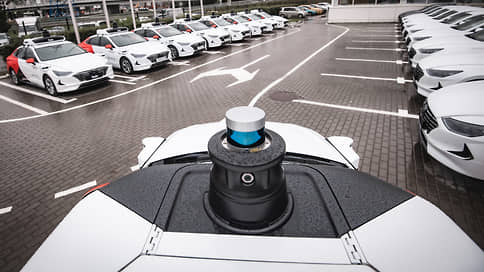
Минтранс представил проект закона «О высокоавтоматизированных транспортных средствах». Он позволит выпустить на дороги общего пользования авто, способные передвигаться без какого-либо участия человека. Ответственность за ДТП с участием таких беспилотников будет распределена между владельцем, разработчиком ПО, сервисным центром, оператором и диспетчером. Машины будут обозначаться специальными знаками, а опрошенные “Ъ” эксперты предлагают ввести бирюзовые или оранжевые номера. Минтранс считает, что к 2050 году половина автомобилей в России будут беспилотными.

2h
3 min
0
Read Article
JPMorgan doubts Ethereum’s post-Fusaka upgrade activity surge will be sustained
Cryptocurrency

JPMorgan doubts Ethereum’s post-Fusaka upgrade activity surge will be sustained

"Historically, Ethereum’s successive upgrades have failed to meaningfully enhance network activity on a sustained basis."

2h
3 min
0
Read Article
Economics

Downtown Denver's office vacancy rate grows to 38.2%

Article URL: https://coloradosun.com/2026/01/22/denver-downtown-office-vacancy-rate-tenants-workplace/ Comments URL: https://news.ycombinator.com/item?id=46722038 Points: 5 # Comments: 1

2h
3 min
0
Read Article
GeForce Now Adds Flight Controller Support for Virtual Pilots
Technology

GeForce Now Adds Flight Controller Support for Virtual Pilots

Cloud gaming platform GeForce Now has officially added support for flight controllers, fulfilling a top community request and opening the skies for virtual pilots.

2h
5 min
7
Read Article
Ex-Binance CEO Advises Governments on Asset Tokenization
Cryptocurrency

Ex-Binance CEO Advises Governments on Asset Tokenization

Former Binance CEO Changpeng Zhao announced he is currently advising several governments on tokenizing state assets, marking a significant shift in his focus following his departure from the crypto exchange.

2h
5 min
6
Read Article
SAE Autonomous Vehicle Classification: The 6 Levels Explained
Technology

SAE Autonomous Vehicle Classification: The 6 Levels Explained

The Society of Automotive Engineers established a definitive six-level framework in 2014 that categorizes vehicle automation based on the driver's role, providing the global standard for the industry.

2h
7 min
6
Read Article
Technology

Launch HN: Constellation Space (YC W26) – AI for satellite mission assurance

Hi HN! We're Kamran, Raaid, Laith, and Omeed from Constellation Space. We built an AI system that predicts satellite link failures before they happen (https://youtu.be/069V9fADAtM). Between us, we've spent years working on satellite operations at SpaceX, Blue Origin, and NASA. At SpaceX, we managed constellation health for Starlink. At Blue, we worked on next-gen test infra for New Glenn. At NASA, we dealt with deep space communications. The same problem kept coming up: by the time you notice a link is degrading, you've often already lost data. The core issue is that satellite RF links are affected by dozens of interacting variables. A satellite passes overhead, and you need to predict whether the link will hold for the next few minutes. That depends on: the orbital geometry (elevation angle changes constantly), tropospheric attenuation (humidity affects signal loss via ITU-R P.676), rain fade (calculated via ITU-R P.618 - rain rates in mm/hr translate directly to dB of loss at Ka-band and above), ionospheric scintillation (we track the KP index from magnetometer networks), and network congestion on top of all that. The traditional approach is reactive. Operators watch dashboards, and when SNR drops below a threshold, they manually reroute traffic or switch to a backup link. With 10,000 satellites in orbit today and 70,000+ projected by 2030, this doesn't scale. Our system ingests telemetry at around 100,000 messages per second from satellites, ground stations, weather radar, IoT humidity sensors, and space weather monitors. We run physics-based models in real-time - the full link budget equations, ITU atmospheric standards, orbital propagation - to compute what should be happening. Then we layer ML models on top, trained on billions of data points from actual multi-orbit operations. The ML piece is where it gets interesting. We use federated learning because constellation operators (understandably) don't want to share raw telemetry. Each constellation trains local models on their own data, and we aggregate only the high-level patterns. This gives us transfer learning across different orbit types and frequency bands - learnings from LEO Ka-band links help optimize MEO or GEO operations. We can predict most link failures 3-5 minutes out with >90% accuracy, which gives enough time to reroute traffic before data loss. The system is fully containerized (Docker/Kubernetes) and deploys on-premise for air-gapped environments, on GovCloud (AWS GovCloud, Azure Government), or standard commercial clouds. Right now we're testing with defense and commercial partners. The dashboard shows real-time link health, forecasts at 60/180/300 seconds out, and root cause analysis (is this rain fade? satellite setting below horizon? congestion?). We expose everything via API - telemetry ingestion, predictions, topology snapshots, even an LLM chat endpoint for natural language troubleshooting. The hard parts we're still working on: prediction accuracy degrades for longer time horizons (beyond 5 minutes gets dicey), we need more labeled failure data for rare edge cases, and the federated learning setup requires careful orchestration across different operators' security boundaries. We'd love feedback from anyone who's worked on satellite ops, RF link modeling, or time-series prediction at scale. What are we missing? What would make this actually useful in a production NOC environment? Happy to answer any technical questions! Comments URL: https://news.ycombinator.com/item?id=46721933 Points: 4 # Comments: 0

2h
3 min
0
Read Article
Superstate Raises $82.5M for Wall Street Tokenization
Technology

Superstate Raises $82.5M for Wall Street Tokenization

A crypto startup helping Wall Street bring assets on-chain has secured $82.5 million in funding, capitalizing on the explosive convergence of traditional finance and digital assets.

2h
5 min
6
Read Article
Zcash Future: Network Activity Dips, Offshoots Show Promise
Cryptocurrency

Zcash Future: Network Activity Dips, Offshoots Show Promise

Despite network activity falling below its historical peak, analysts point to promising offshoot projects that could shape Zcash's future trajectory in the privacy coin space.

2h
5 min
7
Read Article
🎉

You're all caught up!

Check back later for more stories

Back to Home