Key Facts
- ✓ President Emmanuel Macron has called an emergency meeting of his defense cabinet to address urgent security matters.
- ✓ The Swiss Military Review's Editor-in-Chief, Dr. Alexandre Vautravers, has provided expert analysis on the current strategic landscape.
- ✓ France is reportedly taking recent threats from the United States with the utmost seriousness.
- ✓ A fundamental debate has emerged regarding the nation's military focus, specifically expeditionary operations versus homeland defense.
- ✓ The emergency session was prompted by two distinct but simultaneous international developments.
A Moment of Reckoning
President Emmanuel Macron has convened an emergency defence cabinet, signaling a critical moment for French and European security. The high-stakes meeting comes as the international order faces simultaneous pressures from both sides of the Atlantic.
The agenda is dominated by two unfolding crises: the Trump administration's stated intent to acquire Greenland and Iran's violent suppression of mass protests. These events are forcing a rapid re-evaluation of long-held strategic assumptions.
For Oliver Farry, this confluence of events demands more than a routine response. He has sought the expertise of Dr. Alexandre Vautravers, a leading voice in strategy and security, to dissect the implications for France and its allies.
The Greenland Gambit
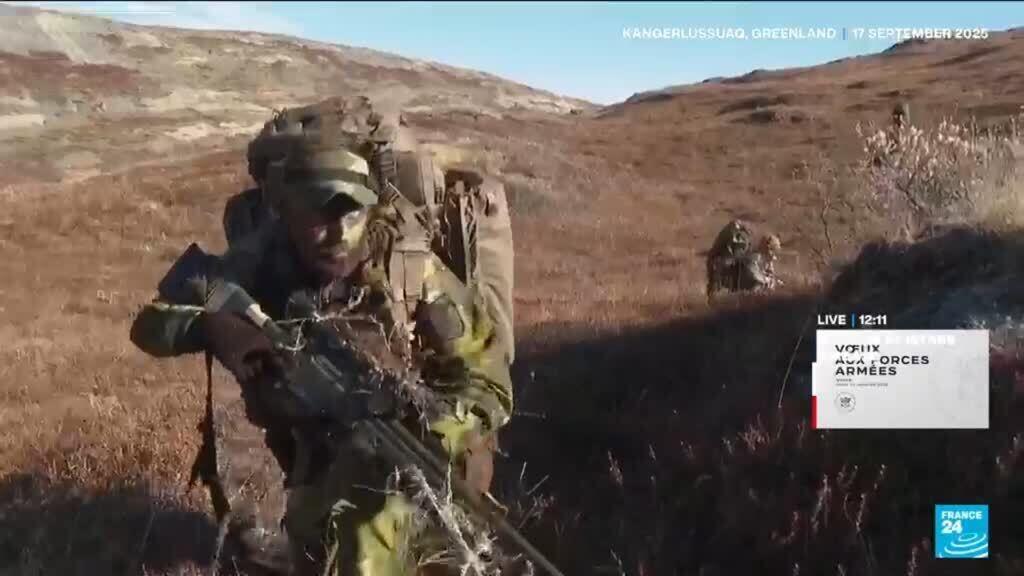
The notion of the United States acquiring Greenland, once dismissed as geopolitical fantasy, is now a subject of serious diplomatic and military concern. The Trump administration's ambition has introduced a new variable into the transatlantic relationship, challenging the very notion of territorial integrity among allies.
France, in particular, is not treating this as mere political posturing. According to Dr. Vautravers, Paris is taking these American threats very seriously. This development represents a potential fracture in the NATO alliance, forcing European powers to consider scenarios previously unthinkable.
The implications are profound:
- Destabilization of Arctic security dynamics
- Challenge to international norms on sovereignty
- Potential re-alignment of global power structures
- Increased urgency for European strategic autonomy
"France is taking US threats 'very seriously'"
— Dr. Alexandre Vautravers, Editor-in-Chief, Swiss Military Review
The Iranian Crisis
Simultaneously, the brutal crackdown on mass protests in Iran presents a different but equally pressing challenge. The internal turmoil in Tehran has regional and global ramifications, threatening stability in the Middle East and testing the resolve of Western powers.
This crisis demands a different kind of strategic response, one that balances humanitarian concerns with security realities. The situation in Iran adds another layer of complexity to an already crowded geopolitical landscape.
For France, these two crises—the American and the Iranian—represent a dual test of its diplomatic and military capacity. It must navigate a relationship with a traditional ally that is becoming unpredictable, while simultaneously responding to instability in a volatile region.
A 'Schizophrenic' Strategy
At the heart of the current debate is a fundamental question about France's military identity. Dr. Vautravers argues that the nation must reassess what he describes as its "schizophrenic approach" to defence.
This approach is defined by a central tension:
- Expeditionary Focus: Prioritizing power projection and overseas interventions.
- Homeland Defense: The need to protect national and European territory.
Dr. Vautravers suggests that this dual focus may no longer be sustainable. The current global climate, marked by direct threats to allied territory and regional instability, may require a clearer prioritization of resources and strategic objectives.
France might need to reassess its "schizophrenic approach' to defence that prioritises expeditionary forces over conventional territorial defence.
NATO's Crossroads
The emergency cabinet meeting is more than a reaction to immediate events; it is a symptom of a larger identity crisis within the North Atlantic Treaty Organization. The alliance, born from a specific Cold War threat, is now navigating a world its founders could scarcely have imagined.
The very foundations of the alliance are being tested. When a primary member state openly discusses territorial expansion against a fellow NATO country's territory (Greenland is an autonomous territory of Denmark, a NATO member), the alliance is indeed at a crossroads.
Dr. Vautravers' analysis points toward a necessary evolution. The question is no longer simply about burden-sharing or defense spending targets, but about the fundamental purpose and strategic direction of the alliance in a multipolar world.
Looking Ahead
The decisions made in Paris and other European capitals in the coming weeks will have lasting consequences. The emergency defense cabinet meeting is the beginning of a conversation, not the end.
Key takeaways from this moment of strategic reflection include:
- The need for a coherent defense strategy that addresses both external threats and alliance dynamics.
- A potential pivot toward a more robust conventional defense posture in Europe.
- The growing importance of strategic autonomy for European nations.
As Dr. Vautravers' insights reveal, the path forward requires difficult choices. The era of comfortable assumptions is over, and the task of reinventing a military alliance for a new age has begun.
"France might need to reassess its "schizophrenic approach' to defence that prioritises expeditionary forces over conventional territorial defence."
— Dr. Alexandre Vautravers, Editor-in-Chief, Swiss Military Review