M
MercyNews
Home
Back
Iran's Crypto Ecosystem Surges to $7.78 Billion
Cryptocurrency

Iran's Crypto Ecosystem Surges to $7.78 Billion

The Block2h ago
3 min read
📋

Key Facts

  • ✓ Iran's cryptocurrency ecosystem reached a valuation of $7.78 billion in 2025, marking substantial growth in the digital asset space.
  • ✓ Activity linked to the Islamic Revolutionary Guard Corps (IRGC) has expanded within Iran's cryptocurrency ecosystem, representing a significant development for sanctioned entities.
  • ✓ Bitcoin withdrawals surged during periods of civil unrest in 2025, indicating cryptocurrency's role as a financial tool during times of social and political tension.
  • ✓ The $7.78 billion ecosystem size demonstrates that cryptocurrency has become a substantial component of Iran's financial infrastructure amid international sanctions.
  • ✓ The growth trajectory suggests cryptocurrency is becoming an increasingly important alternative to traditional banking channels for value transfer and preservation.

In This Article

  1. Quick Summary
  2. Market Growth & Scale
  3. IRGC's Growing Footprint
  4. Bitcoin Withdrawals During Protests
  5. Geopolitical Implications
  6. Looking Ahead

Quick Summary#

Iran's cryptocurrency ecosystem has reached a valuation of $7.78 billion in 2025, according to new data. This substantial growth comes as activity linked to the Islamic Revolutionary Guard Corps (IRGC) expands within the digital asset space.

The surge in value coincides with a notable increase in bitcoin withdrawals during periods of civil unrest. This development underscores the evolving role of cryptocurrency in Iran's financial landscape amid ongoing geopolitical tensions.

Market Growth & Scale#

The crypto ecosystem in Iran has demonstrated remarkable expansion, reaching a total value of $7.78 billion in 2025. This figure represents a significant milestone for digital asset adoption within the country, reflecting both retail and institutional engagement.

The growth trajectory indicates that cryptocurrency is becoming an increasingly important component of Iran's financial infrastructure. As traditional banking channels face limitations due to international sanctions, digital assets offer an alternative pathway for value transfer and preservation.

Key factors contributing to this expansion include:

  • Increased retail adoption of digital currencies
  • Development of local cryptocurrency infrastructure
  • Heightened interest during economic uncertainty
  • Technological advancements in blockchain accessibility

The $7.78 billion valuation demonstrates the scale of cryptocurrency activity occurring within Iran's borders, despite various regulatory and geopolitical challenges.

IRGC's Growing Footprint#

Activity linked to the Islamic Revolutionary Guard Corps (IRGC) has grown within Iran's cryptocurrency ecosystem. The IRGC's involvement in digital assets represents a significant development in how sanctioned entities navigate financial networks.

The organization's footprint in the crypto space has expanded as it seeks alternative methods for international transactions and value storage. This growth aligns with broader patterns of sanctioned entities turning to cryptocurrency to circumvent traditional financial restrictions.

Notable aspects of this development include:

  • IRGC-linked entities engaging in cryptocurrency transactions
  • Use of digital assets for cross-border value transfer
  • Expansion of crypto-based financial networks
  • Integration of cryptocurrency into existing operational frameworks

The increasing presence of IRGC-linked activity within the crypto ecosystem highlights the complex relationship between cryptocurrency technology and geopolitical dynamics in the region.

Bitcoin Withdrawals During Protests#

Bitcoin withdrawals experienced a surge during periods of civil unrest in 2025, indicating that cryptocurrency served as a financial tool during times of social and political tension. This pattern suggests that digital assets played a role in value preservation and transfer during periods of instability.

The timing of increased bitcoin withdrawals coinciding with protests points to cryptocurrency's function as an alternative financial system. When traditional banking services face disruptions or heightened scrutiny, digital assets can provide a decentralized alternative for moving and storing value.

Key observations from this trend include:

  • Heightened bitcoin withdrawal activity during protest periods
  • Increased demand for cryptocurrency as a store of value
  • Use of digital assets for transactions during civil unrest
  • Correlation between social tension and crypto market activity

This pattern demonstrates how cryptocurrency adoption can accelerate during periods of uncertainty, as individuals and groups seek financial tools that operate outside traditional institutional frameworks.

Geopolitical Implications#

The growth of Iran's cryptocurrency ecosystem to $7.78 billion carries significant geopolitical implications. The intersection of digital assets, international sanctions, and regional power dynamics creates a complex financial landscape.

The IRGC's expanding footprint in cryptocurrency represents a strategic adaptation to financial restrictions. As traditional banking channels face limitations, digital assets offer alternative pathways for value transfer and storage.

Important geopolitical dimensions include:

  • Sanctions evasion through cryptocurrency networks
  • IRGC's adaptation to financial restrictions
  • Regional influence through digital asset adoption
  • International monitoring of crypto-based financial flows

The $7.78 billion ecosystem size demonstrates that cryptocurrency has become a substantial component of Iran's financial infrastructure, with implications for international financial monitoring and sanctions enforcement.

Looking Ahead#

The $7.78 billion valuation of Iran's cryptocurrency ecosystem represents a significant milestone in digital asset adoption within the region. This growth, coupled with IRGC-linked activity and bitcoin withdrawal surges during unrest, highlights the evolving role of cryptocurrency in Iran's financial landscape.

Looking forward, the continued expansion of this ecosystem will likely attract increased international attention from regulators and policymakers. The intersection of cryptocurrency technology with geopolitical dynamics presents ongoing challenges for financial monitoring and sanctions enforcement.

Key developments to watch include potential regulatory responses, technological advancements in blockchain privacy features, and the continued adaptation of financial networks in response to geopolitical pressures.

#Companies#Crypto Ecosystems#Layer 1s#Legal#Markets#Policy#Security#Anti-Money Laundering#Chainalysis#Crime#iran#IRGC#Sanctions

Continue scrolling for more

AI Transforms Mathematical Research and Proofs
Technology

AI Transforms Mathematical Research and Proofs

Artificial intelligence is shifting from a promise to a reality in mathematics. Machine learning models are now generating original theorems, forcing a reevaluation of research and teaching methods.

Just now
4 min
227
Read Article
‘Animation Mavericks,’ Feature Doc on Groundbreaking ‘Mr. Magoo’ Producer UPA, Nears Completion
Entertainment

‘Animation Mavericks,’ Feature Doc on Groundbreaking ‘Mr. Magoo’ Producer UPA, Nears Completion

A new feature-length documentary “Animation Mavericks: The Forgotten Story of UPA” is set to premiere later this year from director and producer Kevin Schreck. The project was unveiled at a panel discussing the history of the groundbreaking animation studio Thursday night at the Old Town Music Hall in El Segundo. “Animation Mavericks” covers the origin […]

18m
3 min
0
Read Article
Science

Making U.S. biotech more competitive with China's could help rare disease patients, experts say

China is becoming a leader in biotech innovation. That offers hope to rare disease patients and presents a problem to American companies trying to save them.

19m
3 min
0
Read Article
Politics

Munich Security Conference withdraws Iran's invitations

Organizers of the Munich Security Conference have reversed a decision to invite Iranian leadership figures after deadly crackdowns. Officials said the conditions for meaningful dialogue were "no longer in place."

20m
3 min
0
Read Article
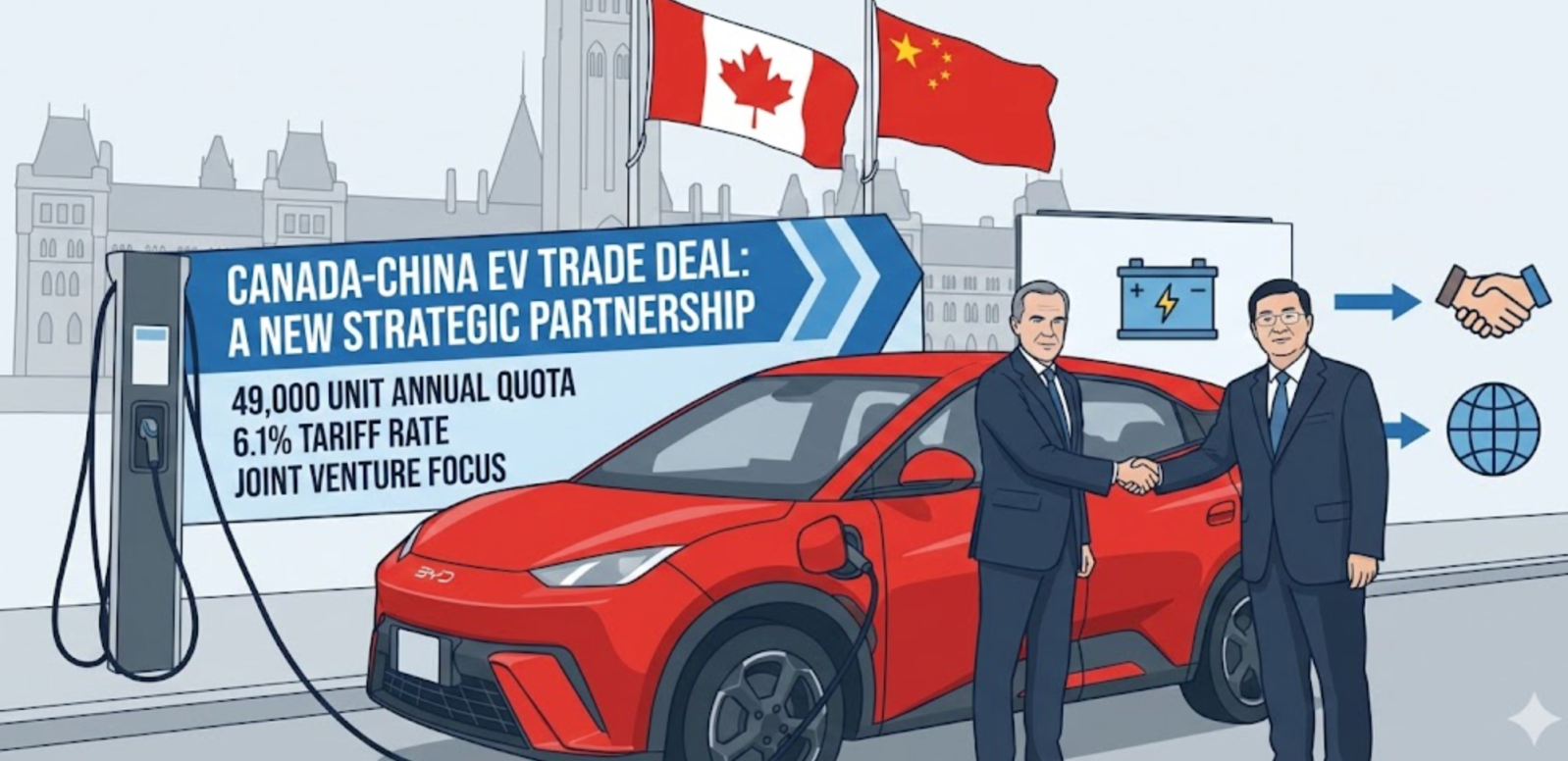
Canada breaks with US, slashes 100% tariffs on Chinese EVs to 6%
Politics

Canada breaks with US, slashes 100% tariffs on Chinese EVs to 6%

In a massive shift in North American trade policy, Prime Minister Mark Carney announced today a new “strategic partnership” with China that effectively reopens the Canadian border to Chinese electric vehicles. The move marks a significant departure from the United States’ hardline protectionist stance and could bring affordable EV options like the BYD Seagull to Canadian roads as early as this year. more…

22m
3 min
0
Read Article
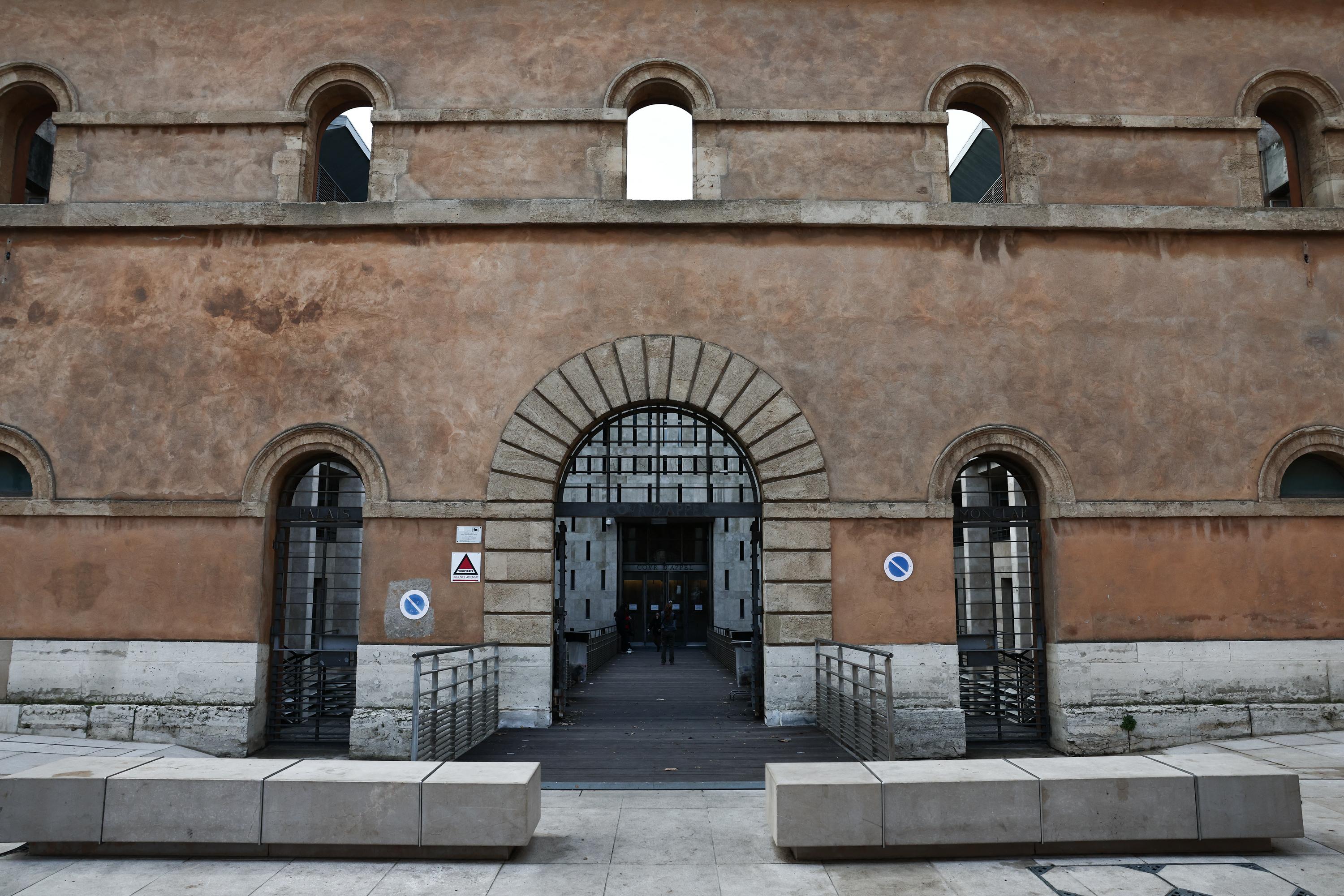
Viols, torture, prostitution forcée : un homme accusé d’avoir fait de sa compagne «son esclave physique, sexuel et psychologique»
Crime

Viols, torture, prostitution forcée : un homme accusé d’avoir fait de sa compagne «son esclave physique, sexuel et psychologique»

La victime, qui vivait à l’époque avec le suspect à Manosque, aurait notamment été contrainte de se prostituer et de subir de graves sévices dont elle garde des séquelles physiques et psychologiques.

26m
3 min
0
Read Article
Govee Is Offering Its Updated RGBIC Smart Lamp at a Major Discount, Now Cheaper Than a Standard Lamp
Technology

Govee Is Offering Its Updated RGBIC Smart Lamp at a Major Discount, Now Cheaper Than a Standard Lamp

Elevate the vibe of your space by adding a smart lamp to it. The post Govee Is Offering Its Updated RGBIC Smart Lamp at a Major Discount, Now Cheaper Than a Standard Lamp appeared first on Kotaku.

27m
3 min
0
Read Article
The world's 10 richest people in 2016 had a combined net worth of under $600 billion — less than Elon Musk is worth today
Economics

The world's 10 richest people in 2016 had a combined net worth of under $600 billion — less than Elon Musk is worth today

Alphabet cofounders Sergey Brin (left) and Larry Page (middle), and Amazon founder Jeff Bezos. Lionel Hahn/Getty Images/Elijah Nouvelage/Remo Casilli/REUTERS The world's richest people have seen their personal fortunes soar since 2016. The top 10 were together worth under $600 billion a decade ago, compared to $2.6 trillion today. Philanthropists Bill Gates and Warren Buffett have slid from first and third place to 17th and 10th. A lot has changed since 2016, the year that "Stranger Things" debuted on Netflix, Leonardo DiCaprio finally won an Oscar, and the Pokémon GO craze spurred players to break into zoos and wander onto military bases to catch virtual critters. As millennial nostalgia for 2016 floods the internet, Business Insider took a look at how the world's wealthiest people have fared over the past decade. The striking trend: the rich getting much, much richer. The world's 10 wealthiest people were worth a combined $559 billion at the end of 2015, per the Bloomberg Billionaires Index. They're now worth nearly five times as much at $2.6 trillion, with Elon Musk alone worth $682 billion as of Thursday's close. The names at the top of the rich list haven't changed much. Bill Gates, Amancio Ortega, Warren Buffett, Jeff Bezos, Carlos Slim, Charles Koch, David Koch, Mark Zuckerberg, Larry Page, and Larry Ellison made up the top 10 going into 2016. All of them rank in the top 25 today except the late David Koch; his widow, Julia Flesher Koch, and her family now hold the 22nd spot in his stead. Musk is the most notable addition, as the Tesla and SpaceX CEO is easily the world's richest person today. Page and his Alphabet cofounder, Sergey Brin, rank second and third with fortunes exceeding $250 billion each. Bezos, Amazon's founder and chairman, sits in fourth once again with a $260 billion net worth. He's followed by Oracle and Meta's respective cofounders, Ellison and Zuckerberg, worth $242 billion and $220 billion, respectively. LVMH founder and CEO Bernard Arnault, former Microsoft CEO Steve Ballmer, Nvidia founder and CEO Jensen Huang, and Buffett round out the current top 10 with fortunes ranging from $148 billion to $200 billion. Movers and shakers Warren Buffett (left) and Bill Gates have tumbled down the rich list since 2016 thanks to their charitable giving. Daniel Zuchnik/WireImage via Getty Images; Justin Tallis - WPA Pool/Getty Images Inditex founder Ortega has tumbled from second to 15th place over the past decade, despite his net worth nearly doubling from $73 billion to $133 billion, as tech fortunes have grown even faster in recent years. Similarly, telecoms mogul Carlos Slim has dropped from fifth to 16th place, and industrialist Charles Koch has fallen from sixth to 24th. Gates, who led the wealth charts a decade ago, has sunk to 17th place largely because of his charitable giving. He and his ex-wife, Melinda French Gates, have donated over $60 billion to the Gates Foundation as of the end of 2024, its website shows. The Microsoft cofounder pegged his personal fortune at $108 billion last May and pledged to give away 99% of it by 2045. It's a similar story for Buffett, who's fallen from third to 10th largely because he's given away more than half of his Berkshire Hathaway stock. The investor said last November that he'd like his three children, now in their 60s and 70s, to disburse virtually all of his wealth in their lifetimes. The most notable difference in today's rankings versus a decade ago is the size of the personal fortunes listed. The top 10 net worths ranged from about $40 billion to $84 billion then, whereas now they range from $148 billion to $682 billion. Put another way, the world's wealthiest individual today is 8 times richer on paper than the richest person on the planet was a decade ago. Musk, in particular, has grown so wealthy because he owns large stakes in several of the world's most valuable companies. Adjusted for stock splits, Tesla shares have soared about 27-fold over the past decade, valuing the EV maker at around $1.5 trillion. SpaceX's private valuation has rocketed to $800 billion as of December, and xAI was valued at around $230 billion this month. Read the original article on Business Insider

29m
3 min
0
Read Article
West Virginia Proposes Bitcoin Investment Bill
Politics

West Virginia Proposes Bitcoin Investment Bill

West Virginia lawmakers introduced legislation authorizing the state treasurer to invest public funds in Bitcoin, precious metals, and regulated stablecoins, marking a significant step toward integrating digital assets into state-level finance.

35m
5 min
6
Read Article
Marseille Mayoral Race: RN vs. Payan
Politics

Marseille Mayoral Race: RN vs. Payan

As Marine Le Pen visits Marseille to support her candidate, a new poll reveals a statistical tie between the National Rally and the incumbent mayor's list, setting the stage for a dramatic political showdown.

38m
5 min
6
Read Article
🎉

You're all caught up!

Check back later for more stories

Back to Home