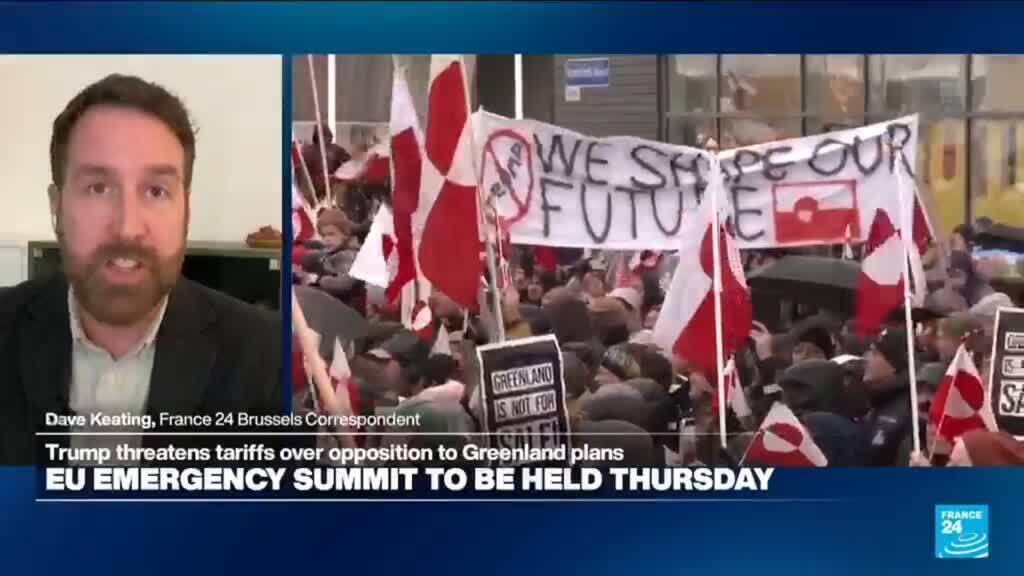
Key Facts
- ✓ European leaders are currently evaluating three primary strategic options to address the economic threats posed by the Trump administration.
- ✓ The geopolitical situation is highly sensitive, with the potential for escalation if the European response is perceived as inadequate.
- ✓ A miscalculation in the response could embolden the U.S. administration to pursue more aggressive actions, specifically regarding the sovereignty of Greenland.
- ✓ The dispute highlights the complex intersection of transatlantic trade relations and territorial integrity in the North Atlantic region.
A Transatlantic Standoff
European leaders are currently navigating a high-stakes diplomatic and economic crisis with the United States. The Trump administration has issued economic threats that have forced Brussels to reevaluate its strategic posture.
The core of the dispute centers on Greenland, a territory whose geopolitical value has surged in recent years. European officials are operating under the assumption that a failure to respond decisively could have severe consequences.
At the heart of the concern is the fear that a weak response might signal vulnerability. Such a signal could potentially embolden the U.S. administration to pursue more aggressive territorial ambitions in the North Atlantic.
The Three Strategic Options
In response to the escalating tensions, European strategists have outlined three distinct pathways for action. These options represent a spectrum ranging from diplomatic engagement to economic retaliation.
The first option likely involves diplomatic negotiation aimed at de-escalating the immediate crisis. This approach prioritizes dialogue to resolve the underlying grievances without resorting to economic warfare.
The second option focuses on economic countermeasures. This would involve implementing reciprocal tariffs or sanctions designed to impose costs on the United States, thereby creating leverage for future negotiations.
The third option remains the most aggressive, potentially involving a unified European front that isolates the U.S. economically. This strategy carries the highest risk but also offers the potential for the strongest deterrent effect.
- Diplomatic engagement and de-escalation
- Reciprocal economic countermeasures
- Strategic isolation and unified front
The Greenland Factor 🇬🇱
While the immediate trigger is economic, the strategic subtext involves the future of Greenland. The island's location and resources make it a focal point of great power competition.
European leaders are acutely aware that the current dispute is not merely about tariffs. It is viewed as a test of resolve regarding the integrity of European territory and influence.
The fear is that President Trump may view a lack of strong European pushback as a green light. This perception could lead to further attempts to alter the status quo in the North Atlantic region.
If they don't get it right, Trump may be emboldened to take over Greenland.
This sentiment underscores the gravity of the decisions facing European capitals. The response must be calibrated to deter aggression without triggering an uncontrollable escalation.
Economic Stakes and Risks
The Trump administration's threats are rooted in economic leverage, specifically through the use of tariffs. These measures are designed to pressure European economies and force concessions.
However, the European Union possesses significant economic power of its own. A trade war would likely result in mutual economic damage, affecting industries on both sides of the Atlantic.
The decision-making process is complicated by the need to balance immediate economic interests with long-term strategic security. Leaders must weigh the cost of retaliation against the cost of inaction.
- Potential for mutual economic harm
- Disruption of established trade flows
- Long-term shifts in geopolitical alliances
The timing of these threats adds to the pressure, as the 2026 political landscape remains volatile. Every move is being scrutinized by global markets and allies alike.
Diplomatic Calculations
Behind the scenes, European leaders are engaged in intense consultations. The goal is to present a united front that maximizes leverage while minimizing the risk of miscalculation.
Coordination among EU member states is essential. A fragmented response would likely be ineffective and could invite further pressure from the United States.
The diplomatic calculus involves predicting the Trump administration's reactions to various countermeasures. Historical patterns suggest that unpredictability is a key feature of the current U.S. foreign policy approach.
European diplomats are also considering the long-term implications for the transatlantic alliance. The outcome of this dispute could redefine the relationship for decades to come.
Looking Ahead
The coming days will be critical in determining the trajectory of this geopolitical standoff. European leaders must choose their path carefully, balancing the need for strength with the imperative of stability.
The decision will not only affect trade relations but could also set a precedent for how territorial and economic disputes are handled in the modern era. The world is watching closely.
Ultimately, the response to these economic threats will define the European Union's role on the global stage. It is a moment that requires both courage and strategic foresight.