M
MercyNews
Home
Back
Spain's Deadliest Rail Crash in Decade
Accidents

Spain's Deadliest Rail Crash in Decade

Financial Times4h ago
3 min read
📋

Key Facts

  • ✓ A train collision near Córdoba, Spain, has resulted in at least 39 confirmed fatalities.
  • ✓ More than 150 people were injured in the crash, many requiring urgent medical care.
  • ✓ This incident is recorded as the most severe rail accident in Spain in over a decade.
  • ✓ Emergency response teams are actively working at the crash site to manage the aftermath.
  • ✓ The Spanish government has initiated a comprehensive investigation into the cause of the collision.

In This Article

  1. Quick Summary
  2. The Collision
  3. Human Toll
  4. Historical Context
  5. Response & Investigation
  6. Looking Ahead

Quick Summary#

A catastrophic train collision has occurred near the southern Spanish city of Córdoba, resulting in a devastating loss of life and widespread injuries. The incident has sent shockwaves through the nation, marking a grim day for its transportation infrastructure.

Emergency services rushed to the scene following the crash, which has been described as the country's most severe rail accident in more than a decade. The scale of the tragedy has prompted a massive response from local and national authorities.

The Collision#

The accident occurred in the vicinity of Córdoba, a major city in the southern region of Spain. Initial reports confirm the collision involved two trains, though specific details regarding the circumstances leading to the impact remain under investigation.

Rescue operations are currently underway at the crash site, with teams working to extract survivors from the wreckage and provide immediate medical attention to the injured. The scene has been described as chaotic, with emergency personnel facing significant challenges in accessing all affected areas.

The immediate aftermath has seen a coordinated effort between local emergency services and national disaster response units. Key priorities include:

  • Search and rescue operations for trapped passengers
  • Medical triage and transport for the injured
  • Securing the site to prevent further incidents
  • Establishing communication with affected families

Human Toll#

The human cost of the disaster is staggering, with officials confirming at least 39 fatalities as a direct result of the crash. This figure represents the most significant loss of life in a single rail incident in the country for over ten years.

In addition to the tragic deaths, more than 150 individuals have sustained injuries of varying severity. Hospitals in the surrounding region have been placed on high alert to accommodate the influx of patients, with many requiring urgent surgical intervention.

The scale of the tragedy has overwhelmed local medical infrastructure, prompting calls for additional support from neighboring regions. The injured are being treated across multiple facilities, with some cases described as critical.

Historical Context#

This incident stands as a stark reminder of the vulnerabilities in modern transportation systems. The 39 confirmed deaths elevate this event to the status of Spain's worst rail disaster since the early 2010s, highlighting the rarity of such catastrophic failures in the nation's recent history.

Spain's rail network is generally regarded as one of the safest and most advanced in Europe, making this collision particularly shocking to the public and experts alike. The event has already sparked discussions about safety protocols and the need for comprehensive reviews of railway operations.

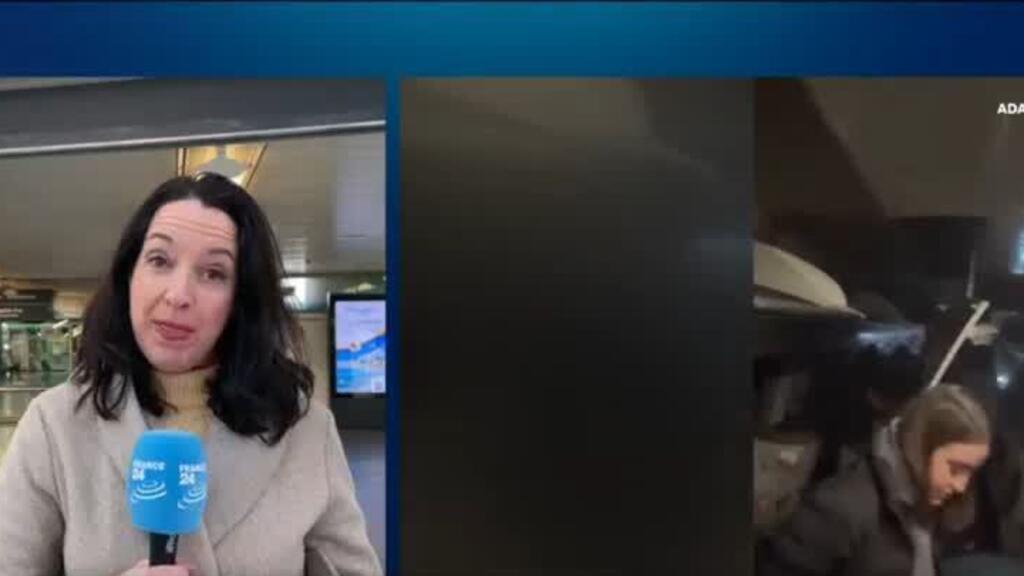
Collision near southern city of Córdoba is country’s worst rail accident in more than a decade.

The psychological impact on survivors, witnesses, and the broader community is expected to be profound, with mental health support services being mobilized to assist those affected by the trauma.

Response & Investigation#

Authorities have launched a full-scale investigation into the causes of the collision. The focus will be on determining whether mechanical failure, human error, or external factors contributed to the crash. All relevant data, including train logs and signal recordings, will be scrutinized.

The Spanish government has pledged a thorough and transparent inquiry, promising to hold any responsible parties accountable. International bodies, including transportation safety experts, may be called upon to assist in the technical analysis of the incident.

Meanwhile, the focus remains on supporting the victims and their families. A national day of mourning is being considered to honor those who lost their lives in the tragedy.

Looking Ahead#

The road to recovery for the survivors and the affected community will be long and challenging. As the investigation progresses, the nation watches closely, hoping for answers that can prevent such a tragedy from recurring.

This event serves as a somber call to action for enhanced safety measures across all modes of public transportation. The legacy of those lost will likely influence policy and infrastructure improvements for years to come.

Continue scrolling for more

AI Transforms Mathematical Research and Proofs
Technology

AI Transforms Mathematical Research and Proofs

Artificial intelligence is shifting from a promise to a reality in mathematics. Machine learning models are now generating original theorems, forcing a reevaluation of research and teaching methods.

Just now
4 min
282
Read Article
Assurance vie : les épargnants choyés avec des rendements au plus haut depuis 2016
Economics

Assurance vie : les épargnants choyés avec des rendements au plus haut depuis 2016

Les assureurs jouent des coudes pour offrir de bonnes rémunérations sur les fonds en euros et collecter plus. Certains contrats offrent jusqu’à 5% de rendement.

25m
3 min
0
Read Article
5 executives share their go-to interview question
Economics

5 executives share their go-to interview question

Executives from Walmart, AT&T, and Dayforce shared their favorite interview question. Chatchai Limjareon/Getty Images Business Insider spoke to five leaders about their go-to interview question. AT&T executive Jennifer Van Buskirk asks two questions that evaluate a candidate's boldness. IBM's Corinne Sklar uses a money-making question to assess for entrepreneurial traits. When preparing for interviews, most people anticipate the classic "Tell me about your background," or "What are your greatest strengths and weaknesses?" Those are always fair game — but some executives have developed their own favorite questions to evaluate specific traits, whether they're determining a candidate's understanding of the role or looking for signs of an entrepreneurial spirit. Business Insider asked five executives, including chief people officers at Walmart and Dayforce, about their go-to interview question. AT&T's head of business operations, Jennifer Van Buskirk Jennifer Van Buskirk said she discovered two key interview questions when hiring for her startup. AT&T Jennifer Van Buskirk has been with AT&T for over 25 years and leads a team of roughly 20,000 people. A few years ago, the head of business operations launched a startup, now operating as Cricket Wireless. She said she discovered two interview questions in the process of building her dream team that still uses to help identify the right candidates. The first one is: What's the greatest risk you've ever taken and why? The second question is: If you started all over again, what would you do differently and why? For both questions, Van Buskirk said she's looking to spot whether the candidate can make bold moves and dream big. As a risk-taker herself, she wants to see that quality in potential hires. "When you're driving change or starting something new, it's really important to get people that can thrive in that kind of environment," Van Buskirk said. Cisco EVP and chief people, policy, and purpose officer Francine Katsoudas Francine Katsoudas said she likes to ask about the most important part of the role, based on prior interviews. IBM Cisco's Francine Katsoudas told Business Insider that she typically speaks with candidates at the end of the interview process, so she likes to ask what they think is the most important part of the role, based on prior interviews. "It's a question that allows me to understand how they've distilled the various conversations that they've had, and then how they have translated that into what's really needed — sometimes beyond the job description," Katsoudas said. She said that's usually her starting point, and it gives her "a lot of insights" about the candidate. Dayforce EVP and chief people officer Amy Cappellanti-Wolf Amy Cappellanti Wolf Dayforce Dayforce chief people officer Amy Cappellanti-Wolf asks a version of the classic "what's your greatest weakness" question. She asks about recent constructive feedback that a candidate is actively working on. She said she's open to personal or professional responses. The executive said she's excited to hear genuine answers and finds it a "problem" if they say they don't get feedback or have nothing they're working on. "It reveals people's character a bit, in terms of their ability to be vulnerable, but also to be open and honest about what they're working on, because we're all a work of art, right? We're all working on ourselves," Cappellanti-Wolf said. IBM VP and managing director for Salesforce, Corinne Sklar Corinne Sklar has been asking the same question for 20 years. Corinne Sklar IBM executive Corinne Sklar has been asking the same question for 20 years, and it helps her identify whether a candidate has entrepreneurial qualities. The question is: "Tell me how you first made money." The executive said she comes back to it every time because it helps her evaluate whether someone is a go-getter and not waiting around for a degree or a job to get started, she said. Sklar said part of the reason she's set on hiring hustlers is because she considers herself one. At 7 years old, Sklar said she knocked on doors to sell hand-drawn 25-cent bookmarks for Halloween. When one woman complained that the bookmark was made of construction paper, Sklar said she offered to laminate it for 50 cents. "I'm looking for people who are not going to ask for permission; they're going to drive their strategy," Sklar told Business Insider at Monday.com's Elevate event in September 2025. Walmart EVP and chief people officer Donna Morris Donna Morris interviews candidates at the leadership level. Walmart Walmart's Donna Morris typically interviews candidates at the leadership level, and her favorite question is one that's open-ended. The question is: "If I was to ask people who've worked for you before, what will they tell me?" "You can't really rehearse for it, even if you knew the question," Morris said. She said she likes to ask this because the candidate's response naturally leads into a larger discussion. Morris said she then continues to probe the candidate further to get more details about how they position themselves in the workplace and interact with others. Read the original article on Business Insider

27m
3 min
0
Read Article
Spanish PM Pedro Sanchez travels to site of deadly train crash
Politics

Spanish PM Pedro Sanchez travels to site of deadly train crash

Spanish Prime Minister Pedro Sanchez and Transport Minister Oscar Puente were among those making their way to the crash site on Monday morning. Sanchez cancelled his trip to the World Economic Forum in Davos, Switzerland after the accident. FRANCE 24's Sarah Morris brings you the latest from Madrid.

36m
3 min
0
Read Article
Advice from 6 quant executives on succeeding in systematic trading — and in life
Economics

Advice from 6 quant executives on succeeding in systematic trading — and in life

Geoffrey Lauprete is the head of Cubist Systematic Strategies. Jeff Yass founded proprietary trading firm Susquehanna International Group. Cubist; Susquehanna Competition for top quant talent has never been stiffer, especially as AI labs enter the fray. Technical brilliance matters, but other skills required to succeed are often overlooked. Execs from firms like Cubist, Tower, and Schonfeld share keys to success in quant trading. Competition for top quant talent has never been stiffer. With top hedge funds and high-frequency trading firms in expansion mode — and increasingly encroaching on the same turf — the mathematicians, physicists, data scientists, and engineers who power them are in high demand. The emergence of AI labs, which can outbid even the top-tier finance firms with war chests of tens of billions in capital, has only ratcheted up the competition. For those eyeing a career in systematic trading — and the skills to get hired — the financial incentives have never been better. Quant interns at Jane Street can now earn tens of thousands over the summer, equivalent to a $300,000 base salary. New grads at top-tier firms can earn compensation packages exceeding $500,000. The truly successful quant researchers and portfolio managers can reap tens of millions annually as their careers progress. Technical brilliance is no assurance of success in this arena. Lasting in such a competitive field, let alone making it to the top, requires skills that are often overlooked or underdiscussed. Business Insider compiled advice and insights from quant execs from firms including Cubist, Schonfeld, Tower Research, and D.E. Shaw about what it takes to succeed in the industry — and in life. Geoffrey Lauprete, head of Cubist Systematic Strategies Geoffrey Lauprete took over as head of Cubist last fall. Cubist Lauprete took over as head of Cubist Systematic Strategies, the quant arm of Point72, in September. He previously spent nearly two decades at systematic giant WorldQuant, including a long stretch as CIO. When interviewing quants, he's looking to suss out what kind of value a candidate added in their previous role — but he's also paying attention to how well they communicate this and whether their answers indicate authentic passion for the job. "Substance matters, but what I'm really impressed by are candidates who have a structured thought process, can clearly articulate why they played an important role in previous mandates, and can bring passion to their story," Lauprete told Business Insider. Quant investing combines several specialties — quantitative analysis, programming and deploying code, and market knowledge — and if "someone can articulate why putting these three things together is exciting, it's usually a reflection of their passion," Lauprete said. Strict, lengthy noncompetes are ubiquitous in systematic trading, with firms sometimes having to wait two years before a hire can join. Lauprete wants to "understand how they are planning to structure their time off and what skills they'll be working on during that time," he said. John Cogman, CIO of Tower Research In the hypercompetitive quant job market, soft skills can set you apart and maximize your earning potential. Tower Research is one of the giants of quant proprietary trading, with over 1,100 employees across a dozen global offices. Identifying and hiring top quants is "one of the most important aspects of our business," CIO John Cogman wrote in a paper titled "The Myth of the Quant God." Cogman said the challenge isn't just in finding technically gifted people, but those who also have the right demeanor and social IQ — a combo that "is infinitely harder and far more valuable." "Quants who reach their full potential tend to share subtler traits," Cogman said. Quantitative brilliance can be undercut by an inability to communicate ideas to other departments, like risk or engineering, by alienating coworkers, or by crumbling under market pressure, Cogman notes. "No one, not even the quant gods in our midst, is great at everything," Cogman said. Those who plateau tend to lack self-awareness. The full package for a quant, in Cogman's view, includes a mix of technical skills — modeling, programming, data analysis, and market know-how — combined with "translational skills" (communication, understanding the big-picture business, and adaptability) and "behavioral skills" like self-awareness, resilience, and consistency. The reality is that quantitative trading is a highly collaborative endeavor, and "lone-wolf geniuses" — or overbearing jerks — aren't good for business. "Our most successful traders aren't necessarily the loudest, the flashiest, or the most strong-willed. They're the ones willing to learn, collaborate, and be self-critical," Cogman wrote. "You can't optimize empathy or quantify resilience, but they move the needle more than any parameter ever could." Mike Tiano, deputy head of systematic strategies at Schonfeld While technical chops, from linear algebra to statistics to coding, are a given, a key trait Tiano — who was promoted to deputy head of systematic strategies in the fall — looks for is curiosity. "An important trait is just obsessive curiosity about problems, especially outside of finance. Because there's a lot of cross-fertilization that goes on," Tiano told Business Insider. Whether it's physics, fluid mechanics, or biological evolution, many disciplines offer problem-solving frameworks that can be applied to systematic trading, including generating alpha signals, portfolio construction, trade execution, and transaction costs. "It gives you the ability to take inspiration from other areas of science and incorporate it into a logical problem," Tiano said. Other attributes that help quants succeed include the ability to fixate on a problem for an extended period of time and dissect it into manageable pieces. "You want to find someone who will obsess over a problem," Tiano said. "They'll go into a research project, and it's going to dominate what they do for a long time." They also need to "have the ability to take a complex problem and break it into smaller pieces in a sensible way." Something that goes hand in hand with that is patience. "They have to be patient. That's hard, because in our industry money is always moving — PNL can change a lot from day to day," Tiano said. "People can get flustered, and it can break their obsessive work on the problem." For new grads, one of the most important pieces of advice is not to underrate the value of networking in getting your first job and building a career, Tiano said, noting every job he's held — from engineering, to academia, to finance — was due in part to networking. "Go to conferences, go to events, join professional societies. Reach out to alumni in the industry," Tiano said. Jeff Yass, founder of Susquehanna International Group Jeff Yass is the founder of Susquehanna International Group. Susquehanna International GRoup Yass, the betting-enthusiast turned options-trading titan, thinks our society overrates the value of calculus and underrates the necessity of understanding probabilities, which has a greater impact on everyday life. "If you really want to be a decision maker under uncertainty, which is what humanity is, you have to learn probability and statistics," Yass said on a recent podcast appearance. It's a blind spot in American education, in his view, and the problem is compounded by the fact that people tend not to properly weigh life's most important decisions — like who you marry. "One of the things that we do in reverse: the bigger the decision, the less time we think about it," Yass said. He continued: "You know, if you're buying or selling a stock — and it's basically irrelevant what you're doing because the markets are fair — you'll spend a lot of time on it. If you're deciding who to marry or who to have a relationship or whatever, you basically just plop into it without much thought. "And one has a gigantic impact on your life and one has a very small impact on your life. Yet we spend much more time worrying about the minor things and not enough time worrying about the big things." In a notable year of financiers offering dating advice, Yass' romantic wisdom is pragmatic, though his solution may be more difficult to implement in practice. "Don't go out with somebody that your friends think is a nutcase," Yass said. He recommends asking your friends — and have them respond honestly and anonymously if possible — a single question: Am I making a gigantic mistake? "So many lives are ruined because you get involved with the wrong person, and no one wants to speak up," Yass added. Gappy Paleologo, global head of quantitative research at Balyasny Asset Management Paleologo is known for offering memes, advice, and unvarnished views on LinkedIn and X. In an extended X thread this past summer, Paleologo offered advice to all the disappointed interns — people at top firms accustomed to succeeding at whatever they put their mind to — who fail to receive a full-time offer. Time for a sober, but hopefully hopeful, possibly short, 🧵. Every year, at this time of the year, I am contacted by several interns across a swat of HF/prop trading firms who were just told, sometimes informally, that they will not receive return offers. 1/ — Gappy (Giuseppe Paleologo) (@__paleologo) August 5, 2025 His first piece of advice is not to bottle it up and wallow in failure in isolation. "Because everyone has experienced at some point what you are experiencing now, and just the memory of rejection burns," he wrote. Then, if you're still set on a career in finance, start getting accustomed to the feeling of failure. "Finance is built out of being right only slightly more than being wrong. You don't learn how to succeed. You just learn how to suffer successfully. Working in finance is like being Jackie Chan's nose in a 1980s Hong Kong martial arts movie. "The bad news is that eventually you look like a tuber. The good news is that ugly noses can be famous too. The big question is, of course, how many punches can a nose bear before stopping functioning altogether. The non-scientific answer to this question is: surprisingly many." His more practical advice for ambitious quants tasting professional rejection for the first time: Apply to a number of firms — not just the best of the best Learn from failed interviews and rejection Don't undervalue external recruiters (but do your diligence) Customize your application to the job Consider a master's or postdoc in a relevant field "The only reason to quit is if you realize that you were cosplaying for someone else. But if you find out you do like finance, most likely things will work out for you." Jeremy Reff, head of recruiting at D.E. Shaw Jeremy Reff, 40, D.E. Shaw's head of recruitment, started out in the firm's investor relations team in 2006. D.E. Shaw D.E. Shaw, one of the most successful quant hedge funds in history, has been known to boast of the International Math Olympiad medal winners on staff, but it also makes a practice of hiring people from non-traditional backgrounds. Reff explained that hiring academics, doctors, veterans or others from fields outside of quant finance can cost more in upfront training but typically yields a strong return on investment. "There are benefits to having a beginner's mindset," he told Business Insider in 2024. D.E. Shaw's interview process aims to gauge whether candidates have creativity, "learning agility," and other attributes that signal potential success at the hedge fund. "There are thousands of indicators for success that we use," he said. "No one is hired solely based on their résumé." Read the original article on Business Insider

37m
3 min
0
Read Article
The world's biggest fast-food chain just landed in NYC. We tried Mixue — and the hype is real.
Lifestyle

The world's biggest fast-food chain just landed in NYC. We tried Mixue — and the hype is real.

I visited the Mixue location in Midtown Manhattan's Herald Square. Henry Chandonnet/Business Insider Mixue has opened its first American locations: two in New York, and one in Los Angeles. I visited the Herald Square ice cream and boba shop to see if it was worth the hype. The options were wildly affordable, giving McDonald's menu a run for its money. New York City has a new ice cream shop. It just happens to be the biggest fast-food chain in the world. The Chinese chain Mixue has more than 46,000 stores globally. That now includes two New York locations and one in Los Angeles — its first in the United States. Mixue offers ice cream, coffee, and boba at ultra-affordable prices. It's one of a variety of Chinese chains, including Luckin Coffee and Chagee, looking to undercut traffic to American companies with their low costs. I visited the Herald Square location of Mixue to see if it lived up to the hype. (Spoiler alert: McDonald's should be worried.) It's official — Mixue, a titan of the Chinese fast food market, has landed on American soil. Henry Chandonnet/Business Insider Mixue's three US locations opened in December. Another New York location is currently being built. The Herald Square location stood out with its bright red exterior. Several passerbys stopped to take photos. At least 20 people lined up outside of the Herald Square location at 1:50 PM on a Friday. Henry Chandonnet/Business Insider Even though it was two weeks out from Mixue's grand opening, the chain still had the red carpet rolled out — and the line was full. I counted over 20 people queueing up. While waiting in line, Mixue blasted its song on a loop. It was sweet at first; after 10 minutes in line, it became head-pounding. The line continued inside, where they were still celebrating the grand opening. Henry Chandonnet/Business Insider The line snaked inside, where it fed out to a set of tablets and a human cashier. On the other side, a pack of customers waited for their items. Across the ceiling hung a long banner, congratulating the store opening. Costs were low — but many items were sold out. Henry Chandonnet/Business Insider I made it to one of the tablets, scrolling the menu of teas, coffees, and sundaes. Mixue has a fairly limited menu, and many of its items were unavailable. I spotted 10 sold out items. Of the fruit tea offerings, only three of nine could be purchased. But, among the items that were available, I was struck at how low the prices were. Placing my order was easy, and it immediately gave me a coupon. Henry Chandonnet/Business Insider I ordered a cone of soft serve and an oolong tea with coconut jelly. The tablet prompted me to sign up for its rewards program, and I immediately got 15% off my order. With the discount, my total was a mere $3.63. My ice cream came first. It tasted… like ice cream. Henry Chandonnet/Business Insider A Mixue employee quickly served up my cone of ice cream, while the tea took a bit longer. The soft serve tasted exactly as you'd expect. It was sweet, creamy, and I finished it within a few minutes. Nothing miraculous, but solid for the price. My cone had three solid swirls stacked on top of each other. While waiting for my tea, I noticed some customers — especially those who ordered matcha-flavored cones — had shorter stacks. The oolong tea was delicious and affordable. Henry Chandonnet/Business Insider The oolong tea came out a few minutes later. I popped the lid with the straw, gave it a big sip, and savored the coconut jellies inside. I had customized it just right: 70% sugar, less ice — delicious. There's a Gong Cha two blocks from the Mixue location. A similar tea at this location would cost $7.10 on Grubhub. That's almost three-times the price. The soft serve at McDonald's was over $2 more expensive. Henry Chandonnet/Business Insider Could Mixue undercut the American market with its low prices? I walked two blocks over to a McDonald's, which also offers a cheap cone of vanilla ice cream. At $3.29, the McDonald's cone was over $2 more expensive than Mixue. Mixue debuted on the market with a splashy IPO in March. Mixue had a splashy IPO debut in Hong Kong Liu Junfeng/VCG via Getty Images The ice cream and bubble tea chain went public in March, and it had a blockbuster first day of trading. The company's shares jumped 30% from their IPO price after the market opened. On its first day of trading, it offered close to 17.1 million shares, which amounted to 3.45 billion Hong Kong dollars, or about $444 million. At market close on Friday, Mixue's stock was up over 60% from its IPO price, trading at HK$419 per share. The chain is now the biggest fast food chain in the world by store count, beating its Western competitors. The sign of Mixue Bingcheng is seen at its shop in Shanghai, China. Aly Song/Reuters Mixue's retail footprint, with more than 46,000 stores globally, has far outpaced other global F&B giants like Starbucks and McDonald's, which have about 40,000 and 43,000 stores worldwide, respectively. Although its presence is largely concentrated in China, it also has a significant footprint in Southeast Asian countries like Singapore, Thailand, Malaysia, Indonesia, and Vietnam. It has some outlets in Australia and New Zealand as well. However, the Tribeca store is its first foray into North America. The Singapore store experience: cheap and to-go. Mixue is known for its soft-serve ice creams and fruity milk teas, all priced under $3. Aditi Bharade Mixue outlets in Singapore are designed for convenience, with all of them being to-go counters. When Business Insider visited the Mixue Singapore store in March, there was a queue of about five people before the counter. The store's bright sign and its "Snow King" mascot — a snowman wearing a crown — were enough to catch the attention of passersby. The price tags were likewise conservative. The most expensive item in the store was a cheese strawberry drink for 4 Singapore dollars, or about $3.12. The cheapest was the SG$1.50 Signature King Cone soft serve ice cream. The soft serve tasted just as good as McDonald's, with a much bigger, crispier cone. The strawberry cheese drink, a rather suspicious combination, turned out to be very refreshing. Most of the store's drinks were priced from SG$2.50 to SG$3.50. Other Chinese companies are making inroads into the US. Women leave a Luckin Coffee store in Beijing. Thomas Peter/Retuers Mixue's US debut is the latest example of Chinese companies trying to get a slice of the US food and beverage consumer pie. Its store opening comes shortly after its competitor, Luckin Coffee, opened its first two stores in NYC in June. According to its Instagram, the Luckin Coffee chain has five outlets in the city now. Luckin Coffee, which is known for its budget coffee and aggressive promotions, is Starbucks' biggest competitor in China. Bubble tea brand Chagee, which also went public this year in April, opened its first US store in Los Angeles in May. Read the original article on Business Insider

38m
3 min
0
Read Article
Bridges are crypto’s next FTX waiting to happen
Cryptocurrency

Bridges are crypto’s next FTX waiting to happen

Cross-chain bridges concentrate risk and centralize trust, creating vulnerabilities that could trigger a systemic crypto crisis under stressed market conditions.

38m
3 min
0
Read Article
Norway Advises Citizens on Wartime Property Requisitions
Politics

Norway Advises Citizens on Wartime Property Requisitions

Norway's military has initiated a new communication campaign, sending letters to property owners regarding potential wartime property requisitions. The initiative aims to inform citizens about the legal framework for state seizure of private assets during a conflict.

41m
5 min
6
Read Article
From Princeton to Millionaire: How One Engineer Redefined Success
Lifestyle

From Princeton to Millionaire: How One Engineer Redefined Success

A Princeton-educated engineer traded a stable corporate career for entrepreneurship, building a million-dollar business that prioritizes family and flexibility over traditional success metrics.

41m
5 min
6
Read Article
Germany-US Rift: Greenland Tipping Point
Politics

Germany-US Rift: Greenland Tipping Point

The second term of US President Donald Trump has brought unprecedented strain on once-solid German-American relations. The issue of Greenland could be a tipping point.

43m
7 min
6
Read Article
🎉

You're all caught up!

Check back later for more stories

Back to Home